

Navigating the FHA 203k Renovation Loan: Essential Upfront Costs & Realities No One Tells You
My journey into blogging began as a personal sanctuary—a place to archive recipes and document my culinary adventures. It has evolved into a delightful journal of my growth, not just as a baker and cook, but as an individual. While financial gain has never been the primary driver, sharing my experiences, both triumphs and mishaps, has brought immense satisfaction, hoping to inspire or at least entertain others along the way.
In this spirit of evolution and sharing, I recently embarked on a colossal undertaking that, until very recently, felt almost unimaginable for me: purchasing a home with my husband. True to form, our path was anything but conventional. We eschewed the easy, traditional route, opting instead for a journey far off the beaten track—a veritable swim against the current.
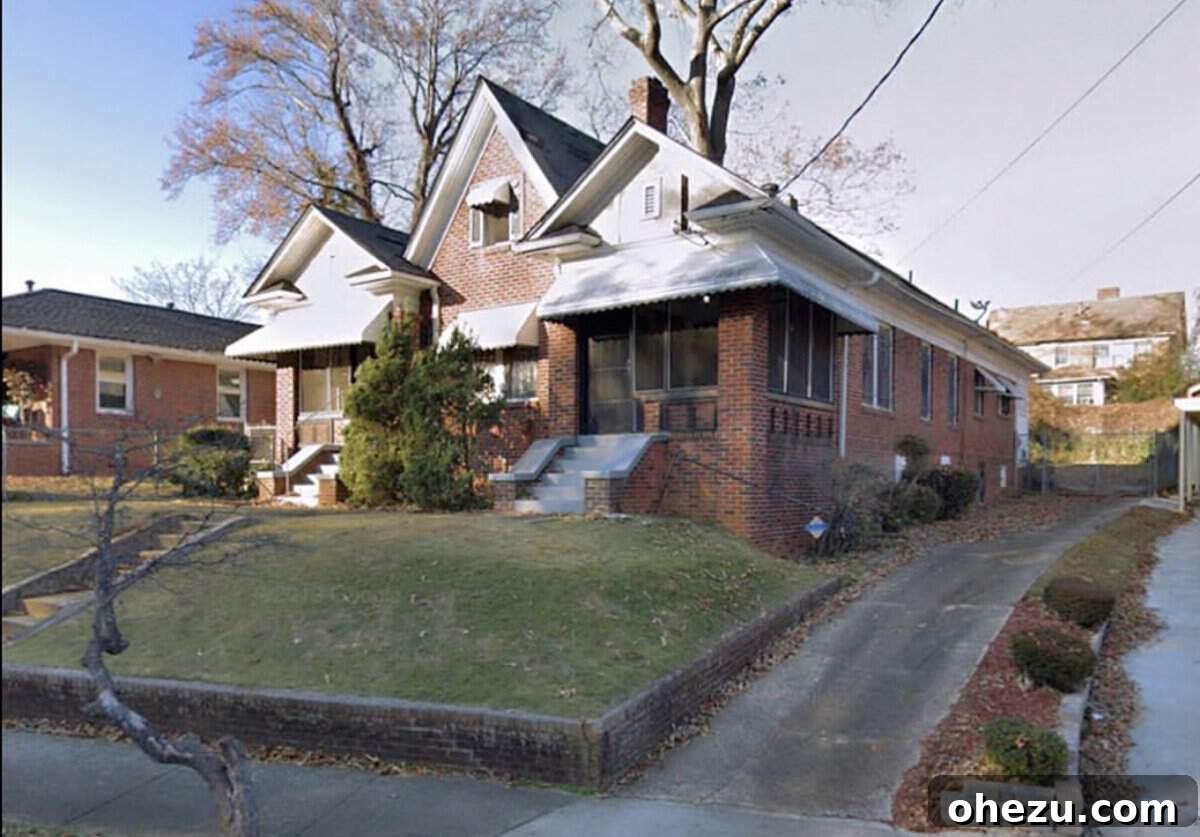
Specifically, we dove headfirst into the world of fixer-uppers, acquiring a property that many might affectionately (or despairingly) call a “complete dump,” with the ambitious goal of a full, transformative renovation. The reactions ranged from incredulity to outright alarm; friends and family alike questioned our sanity, predicting marital strife and endless relationship woes. However, those who truly know us, who understand the depths of what we’ve navigated together, understand that such warnings fall on deaf ears.
So, if you’ve stumbled upon this post with a glimmer of interest in a home renovation, or perhaps you too have been labeled “crazy” for your audacious dreams, then you’ve found your tribe. This platform is dedicated to meticulously documenting every twist and turn of our chaotic adventure, offering an unfiltered glimpse into the realities of such a monumental endeavor. My aim is to share every lesson learned, every pitfall encountered, and every hard-won success, ensuring you’re as prepared as possible for your own renovation odyssey.

While the decision-making process behind pursuing an FHA 203k renovation loan is a story in itself (which you can explore further here), this particular article delves deep into the often-overlooked, yet crucial, upfront financial realities of this specialized loan. We’re pulling back the curtain on the expenses and procedural intricacies that frequently go unmentioned in typical homebuying guides, providing insights into what the FHA 203k loan process truly demands on the front end.
Key Upfront Costs & Steps in Your FHA 203k Renovation Journey
1) Navigating the Offer Submission and Earnest Money
After what can feel like an eternity of house hunting, the thrill of finally finding a property that captures your vision for a fixer-upper is immense. Congratulations! However, for those venturing into competitive markets teeming with investors, prepare for a rigorous and often emotionally taxing bidding war. Submitting multiple offers became our norm, a testament to the fiercely competitive landscape. When that dream house finally appears, the anticipation of an accepted offer can be a dizzying rollercoaster of hope and anxiety. Maintaining realistic expectations throughout this phase is paramount.
Once your offer is conditionally accepted—a moment of triumph in itself—the next immediate step is to submit earnest money. This “good faith” deposit, typically ranging from $500 to $2,500, depending on your specific circumstances and the property’s value, signals your serious intent to purchase. While this sum is eventually credited towards your down payment, it’s crucial to understand its implications. Should you decide to withdraw from the purchase after the due diligence period, the seller usually retains 100% of this deposit as compensation for their time and lost market opportunity. State laws vary significantly on earnest money forfeiture; in Georgia, for instance, this is indeed the standard practice.
Estimated Earnest Money: $500 – $2,500
2) The Intense Period of Due Diligence
For us, the seven-day due diligence period proved to be one of the most intensely stressful weeks of our lives—a period fraught with overwhelming pressure that felt akin to walking a tightrope. Each of those seven days was packed with critical, often last-minute appointments with inspectors, contractors, and specialized HUD consultants. Unlike a standard home purchase where a simple “is this house in good shape?” suffices, a renovation loan demands a far more exhaustive inquiry into the property’s condition and renovation potential.
To acquire the detailed answers necessary for an FHA 203k loan, you must be prepared to incur significant upfront costs. A comprehensive inspection is not just recommended; it’s a non-negotiable prerequisite to thoroughly assess every renovation need. Identifying major structural issues, pervasive mold, or other potentially deal-breaking flaws early on is critical to prevent these unexpected problems from devouring your entire renovation budget. Bear in mind, you are paying for crucial information on a house you may ultimately decide not to purchase. Key questions you’ll need answers to, and the professionals who provide them, include:
- What is the overall current condition of the house? (Certified House Inspector)
- What are the most significant, high-cost renovation items required? (Contractor Bids)
- Are there any deal-breaking issues that would compel us to walk away? (Certified House Inspector / HUD Consultant)
- What is the estimated total cost of this renovation project? (Comprehensive Contractor Bids)
- Can our desired renovation goals be achieved within our allocated budget? (Contractor / Inspector / HUD Consultant collaboration)
- Will the scope of this renovation necessitate engaging a civil engineer, land surveyor, or architect? (Architect / HUD Consultant for initial assessment)
These initial assessments are not just about identifying problems; they are foundational to structuring your 203k loan, as the scope of work and associated costs directly influence the loan amount. Therefore, budgeting for these upfront investigative costs is just as important as the renovation itself.
Estimated Due Diligence Costs: $1,200 – $1,500 (Typically includes HUD Consultant Inspection ~$700, Certified Home Inspector ~$500, plus various contractor estimates which may or may not be charged depending on the contractor).
3) Engaging an Architect for Renovation Plans
Once you’ve successfully navigated due diligence and committed to moving forward with your chosen property, the next critical step often involves engaging an architect to develop your detailed renovation plans. For many older homes, especially those undergoing significant structural or layout changes, you’ll need both “As-Built” plans (documenting the existing structure) and “Proposed” plans (illustrating the planned modifications). These aren’t just for aesthetics; they are often mandatory for city permits and for the FHA 203k loan approval process, ensuring the renovation aligns with safety and building codes.
The importance of selecting the right architectural professional cannot be overstated. Look for someone with:
- Outstanding Communication Skills: Clear and consistent dialogue is essential to convey your vision and understand their professional advice.
- Local Expertise: An architect experienced in your specific city or county will be familiar with local zoning laws, building codes, and permitting processes, which can significantly expedite approvals and minimize costly revisions.
- Client-Centered Approach: Seek an architect who genuinely listens to your needs and respects your budget, rather than imposing their own design philosophies without consideration for your preferences. While architects bring invaluable expertise, a collaborative spirit is key for a successful project.
Rushing this decision can lead to significant headaches and expenses down the line. It’s your vision, your home, and your investment; take the time to find an architect with whom you truly connect. Expect to pay a substantial upfront deposit to initiate the preliminary plans, with options often available to finance the remaining balance as the project progresses.
Estimated Architect Deposit: $2,500++ (Total architectural fees can range from 5-8% of the overall renovation cost, so this initial deposit is just a fraction of the full expense).
4) Unexpected Demands: Surveyor & Civil Engineer
Our experience taught us a harsh, expensive lesson about the unpredictable nature of municipal regulations, causing significant project delays and added costs. We were repeatedly advised by our contractor, inspector, and architect that a land survey wouldn’t be necessary for our renovation, as we weren’t altering the house’s footprint or adding new floors. This assumption, unfortunately, proved incorrect.
The city’s permitting department rejected our plans multiple times, each time for a novel reason. Our plan to add dormers to the existing second floor became a sticking point; the city required confirmation that these additions would not infringe upon property lines. While our architectural elevations provided some indication, it wasn’t deemed sufficient. This forced us into a last-minute scramble to find a surveyor capable of creating a detailed site plan, costing us an additional $1,000.
Just when we believed this would finally unlock our permit—after waiting five weeks to commence construction—we faced another hurdle. The newly commissioned site plan, surprisingly, did not explicitly depict the dormers. This necessitated the involvement of a civil engineer, as architects typically shy away from site plans and boundary specifics due to the inherent liability. Fortunately, our contractor leveraged a personal connection, securing the civil engineer’s expertise through a favor (and perhaps, as humorously noted, a rack of ribs on Labor Day weekend!). This unforeseen requirement underscored the critical importance of anticipating every possible bureaucratic demand when dealing with renovation permits, especially on older or unique properties.
Estimated Surveyor Fee: $1,000
Civil Engineer Fee: Variable (Can be significant, but sometimes mitigated by professional connections, highlighting the value of your network).
5) The Shifting Landscape of Closing Costs
The very mention of “closing costs” still evokes a wave of frustration from our renovation loan process. For first-time homebuyers or those unfamiliar with the intricacies of renovation loans, the constantly fluctuating nature of these costs until the very day of closing is an unwelcome surprise. My husband and I meticulously reviewed our initial closing disclosure, carefully planning how to cover these costs alongside our down payment. However, with each new discovery, every contractor bid adjustment, or updated tax assessment, our closing costs invariably shifted. And almost without fail, these adjustments were always upwards, never downwards.
We genuinely considered abandoning the project numerous times. Yet, having already invested thousands (in our case, over $5,000) into a property we didn’t yet own, walking away felt increasingly difficult. A particularly challenging aspect of renovation loans, especially for “as-is” properties, is the rarity of seller concessions or contributions towards closing costs. Unlike conventional sales where negotiation on these terms is common, with a fixer-upper, what you see is largely what you get.
To partially offset our burgeoning closing costs, we employed a perfectly legal strategy: we increased the home’s purchase price by $6,000 and stipulated that the seller “pay” an equivalent $6,000 towards our closing costs. This effectively allowed us to finance a portion of our closing expenses through the loan itself, a common tactic when seller contributions are otherwise unattainable.
Estimated Closing Costs: $11,955 (This figure often includes the FHA Mortgage Insurance Premium, which is a standard component of FHA loans and can add a significant sum to your total closing expenses).
6) Understanding Your Down Payment for an FHA 203k Loan
The down payment is perhaps the most straightforward component, yet it varies widely based on individual financial situations and loan types. While a conventional loan ideally calls for a 20% down payment to avoid Private Mortgage Insurance (PMI), an FHA 203k loan offers a more accessible entry point into homeownership with a significantly lower minimum down payment. For FHA loans, this is typically around 3.5% of the appraised value (or purchase price plus renovation costs, whichever is lower).
Even with FHA loans requiring a Mortgage Insurance Premium (MIP) for the life of the loan (unless a large enough down payment is made, which is rare for the minimums), there are pathways to mitigate this. You can choose to refinance into a conventional loan once you’ve built sufficient equity and qualify for it, thereby eliminating the MIP. Alternatively, the MIP automatically ceases once your loan-to-value (LTV) ratio reaches 80% of the home’s original appraised value, provided you’ve made consistent payments. It’s a significant financial commitment, but FHA loans democratize homeownership for many who might otherwise be priced out of the market.
Estimated Down Payment: $12,000 (This amount is typically net of any earnest money already paid, which is credited towards your total down payment).
The Grand Payoff: Beyond the Financial Strain
It’s easy to look at the preceding list and feel a sense of dread, as if the process is designed solely to drain your finances and, perhaps, your sanity. And yes, there were moments—many moments—when laughter was the only thing stopping tears. But as the saying goes, “beauty is pain,” and in the context of a home renovation, that pain is often transformed into immense pleasure and satisfaction. Ultimately, it will all be worth it. While I am still navigating the winding road towards the “end” of my own renovation, this journey has become an incredibly exciting and transformative chapter in our lives.
Reflecting on these candid financial truths, my intention is not to dwell solely on the negatives. Rather, it is to illuminate the often-undiscussed monetary realities of an FHA 203k renovation loan—details conspicuously absent from popular home improvement shows like “Fixer Upper” or “House Hunters Renovation.” Had we been fully aware of every potential cost and procedural twist before we began, we still would have pursued this path. However, a clearer understanding would have certainly mitigated the shock and stress of constant surprises around every corner.
My deepest hope is that this comprehensive guide empowers you with the knowledge needed to make informed decisions, fully comprehending the financial and logistical demands before you invest your invaluable time and resources. Armed with this transparency, your own renovation adventure can be approached with greater confidence and preparedness.
Do you have specific questions about the FHA 203k loan process, or perhaps your own renovation experiences to share? Please don’t hesitate to leave a comment below!