
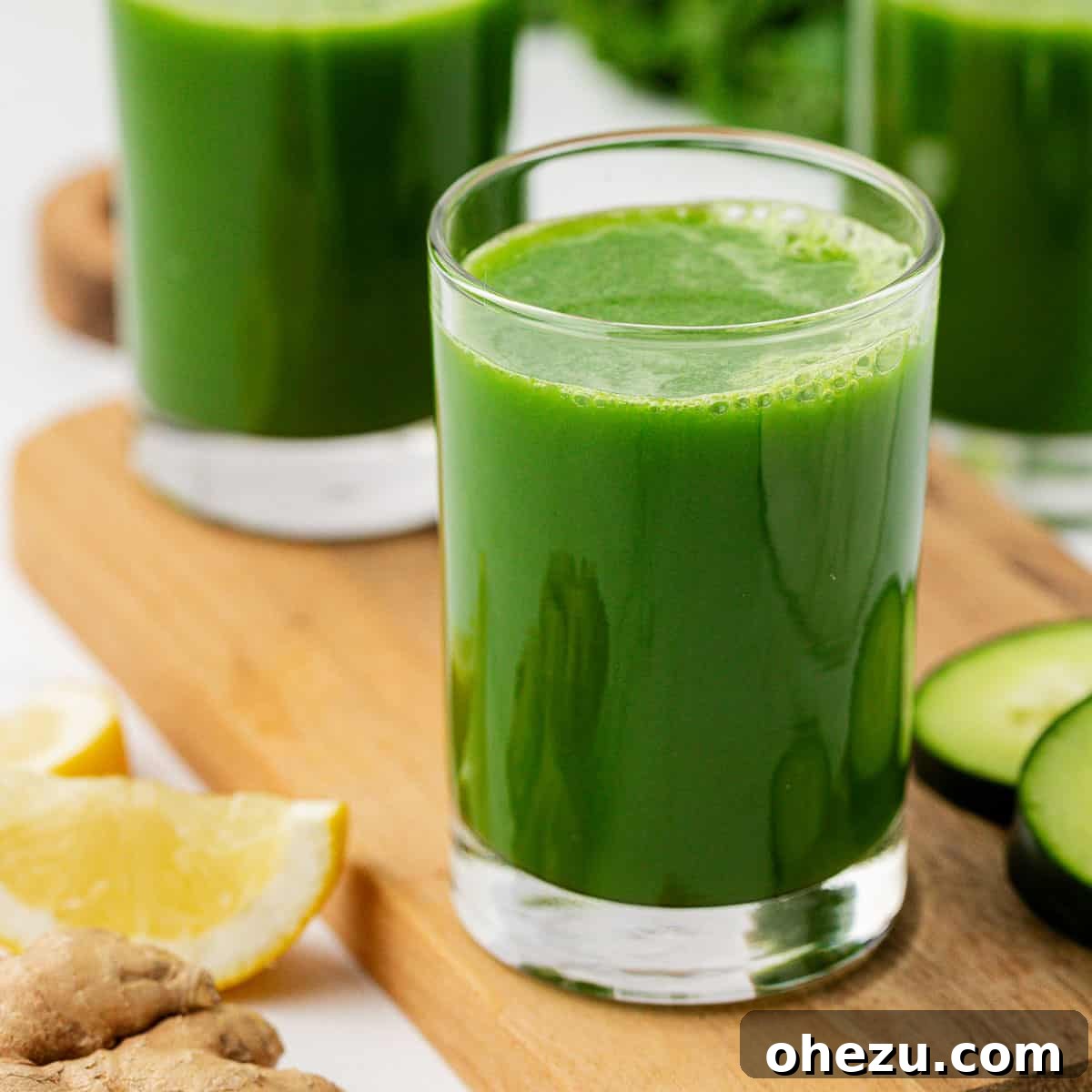
The Ultimate Refreshing Kale Juice Recipe: Your Path to Vibrant Health
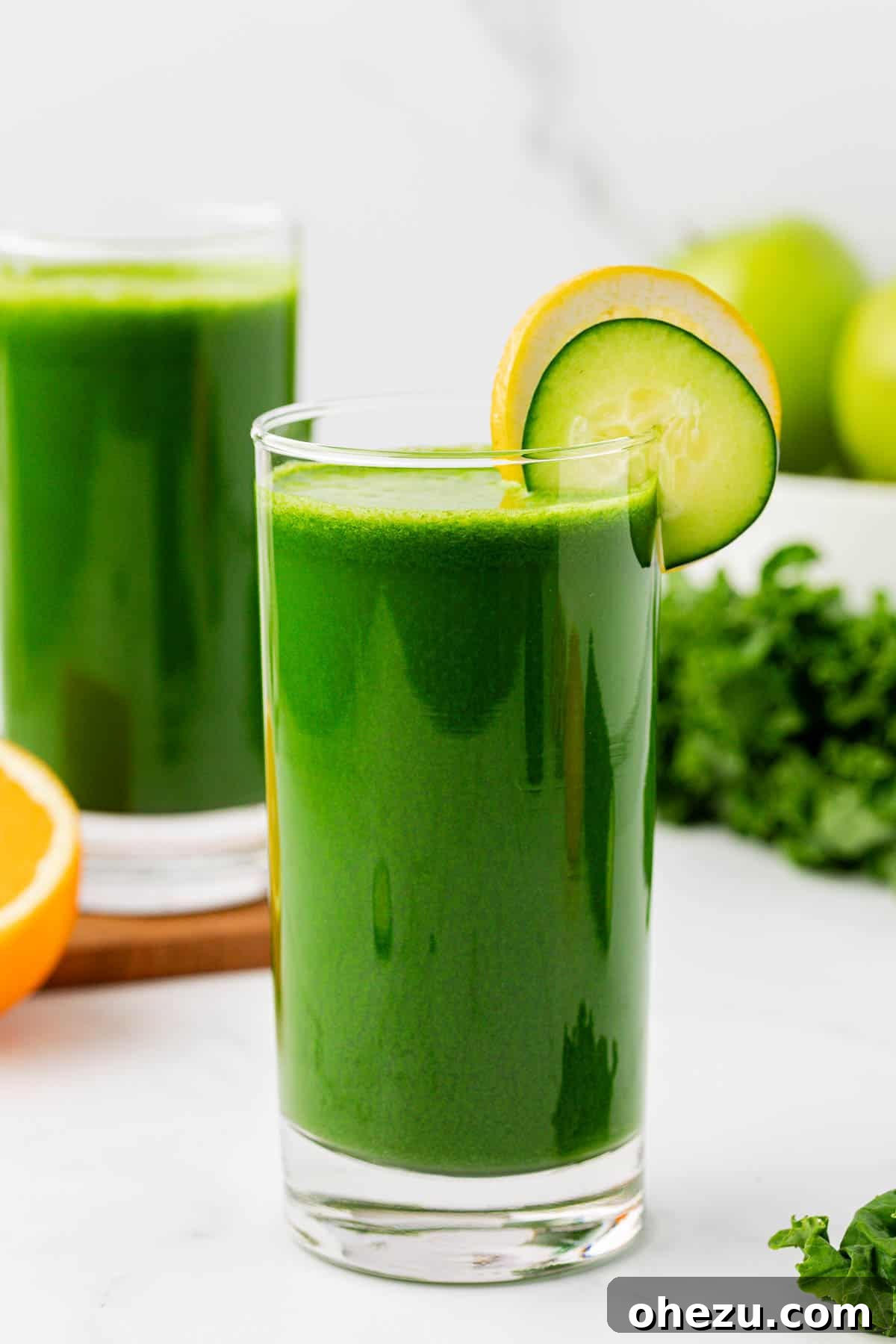
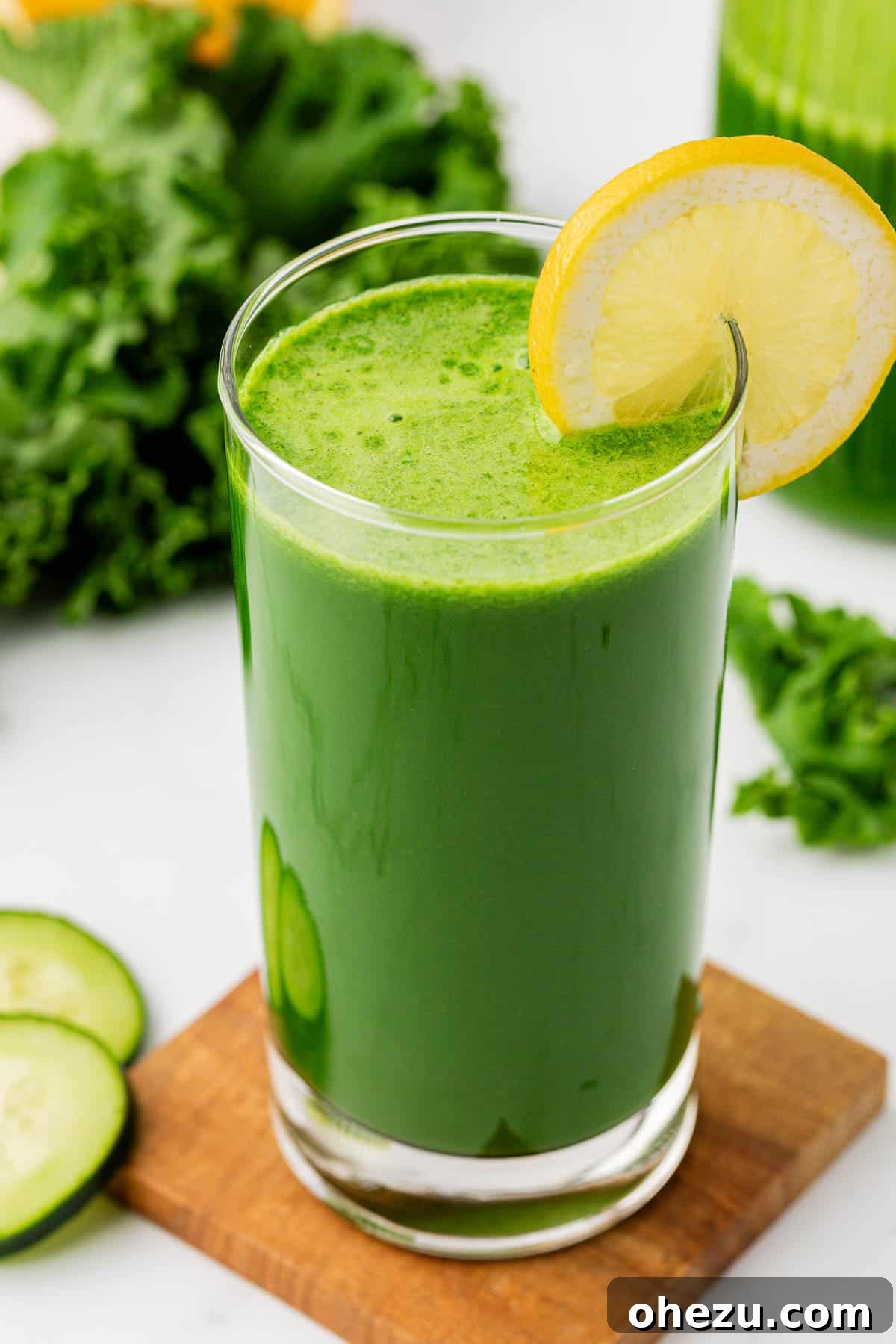
Discover how to make the best Kale Juice recipe! Crafted with the freshest ingredients, naturally sweetened with crisp apple and vibrant citrus, and given a zesty kick from ginger, this delicious juicing recipe is an essential addition to your wellness routine.
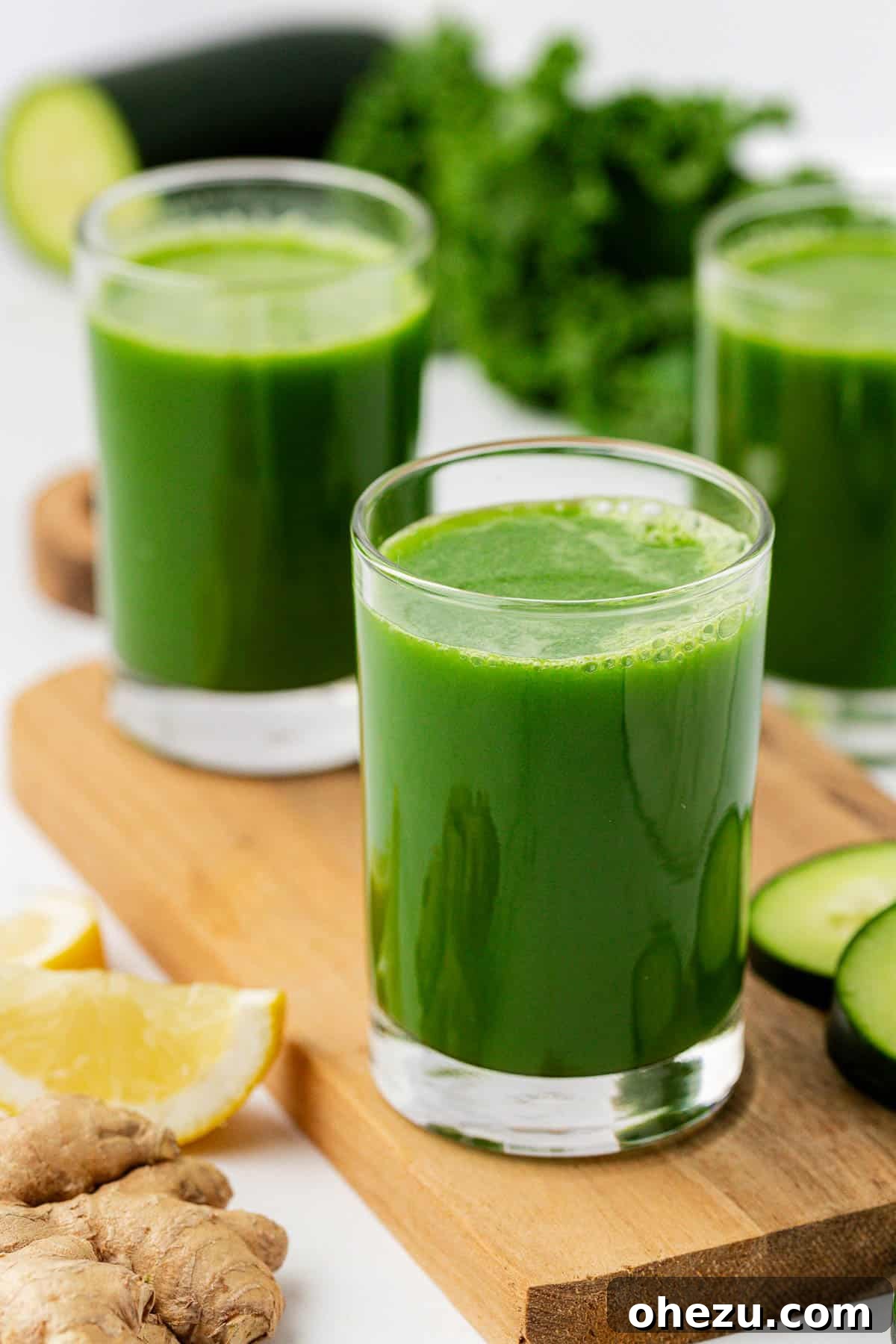
Experience the Invigorating Power of Fresh Kale Juice
Kale stands out as one of the most remarkable greens for juicing, celebrated for its unparalleled nutritional density. When combined with the hydrating qualities of cucumber, the bright zest of citrus, and the natural sweetness of apple, it transforms into a truly invigorating beverage. Our signature kale juice recipe expertly blends the lively flavors of lemon and orange with the gentle sweetness of a green apple, creating a taste profile that is both refreshing and incredibly palatable.
Embracing a daily green juice ritual, especially first thing in the morning, has become a cornerstone of my wellness journey. While I never advocate for replacing full meals with juice, incorporating freshly pressed juices like this Kale Juice recipe provides a significant surge of nutrients and allows me to consume far more vegetables than I typically would in a day. It’s an easy, enjoyable way to supercharge your nutrient intake and give your body an undeniable boost.
I consistently observe a tangible difference in my energy levels, mental clarity, and overall well-being when I regularly enjoy fresh juices. There’s a particular joy in anticipating a glass of perfectly cold-pressed juice! This recipe, in particular, shines with its light, naturally sweet, and incredibly vibrant flavor profile, thanks to the harmonious blend of lemon, orange, and apple. A touch of fresh ginger adds an exciting, warming zing that elevates the entire experience, making it utterly delicious and highly addictive.
Key Ingredients for Your Perfect Kale Juice
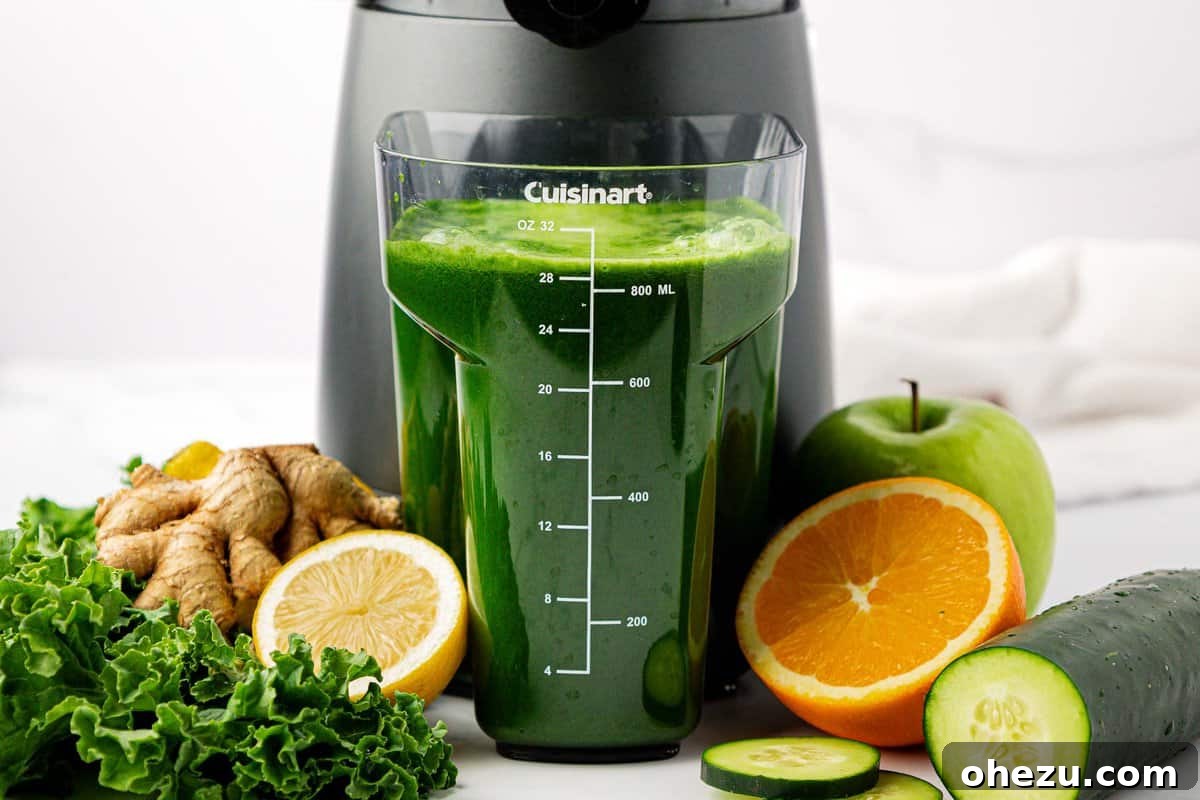
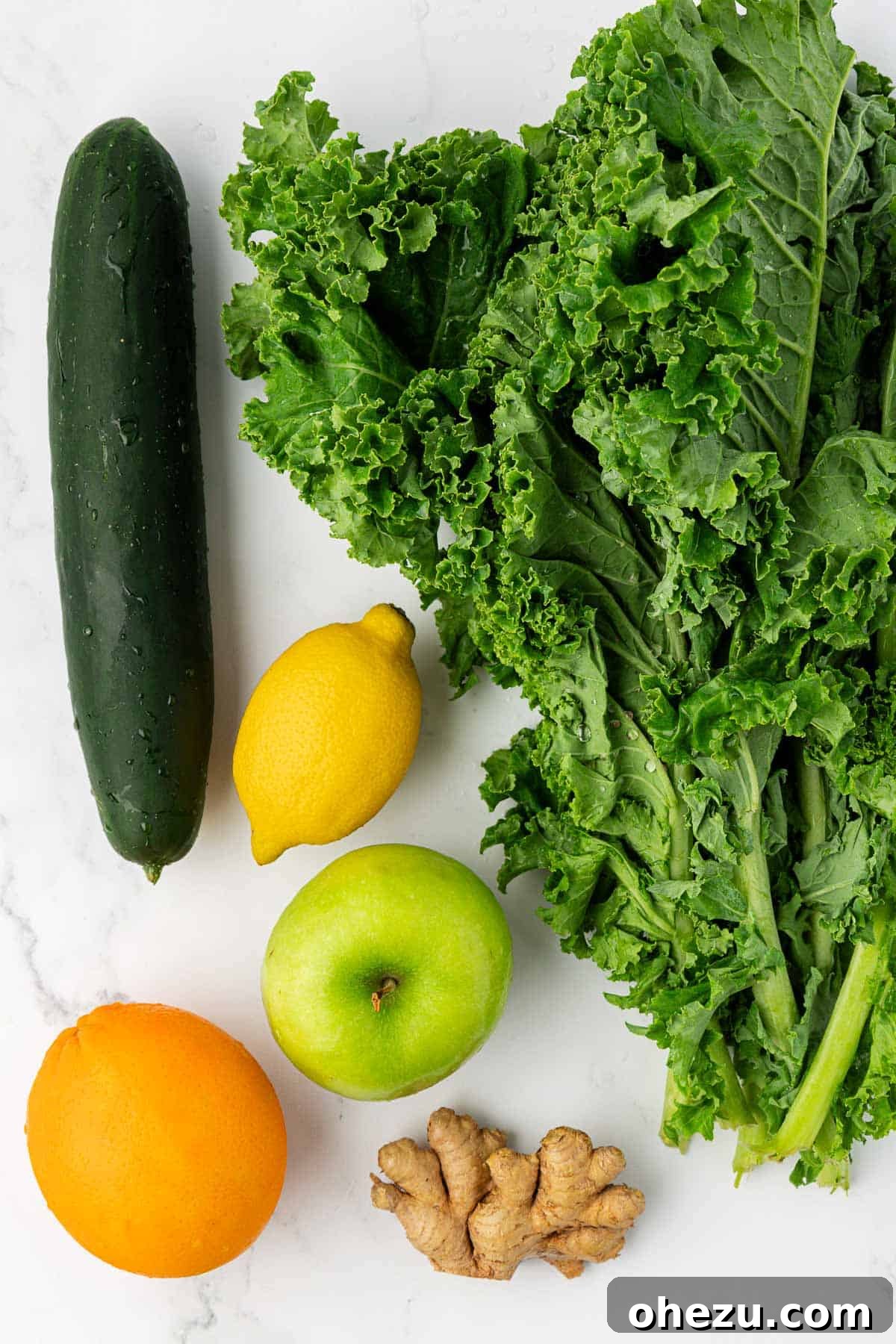
Crafting this vibrant green juice requires a selection of fresh, high-quality ingredients. Each component plays a crucial role in both the nutritional value and the exquisite flavor of the final product. While the detailed amounts and instructions are provided in the comprehensive recipe card below, here’s a glimpse into the essential elements you’ll need, along with why they make this juice so special:
Unlocking the Power of Each Ingredient:
- Kale: The undisputed superfood star, kale is an exceptional source of vitamins K, A, and C, essential for bone health, vision, and immunity. It’s also rich in powerful antioxidants and detoxifying compounds, making it a foundation for any healthy green juice.
- Cucumber: Composed of over 95% water, cucumber offers incredible hydration and a mild, refreshing base flavor that beautifully balances the intensity of kale. It’s packed with electrolytes and anti-inflammatory properties, making it excellent for skin health and overall revitalization.
- Orange: Beyond its delightful natural sweetness, orange provides a significant boost of Vitamin C, crucial for immune function and collagen production. Its bright, tangy notes enhance the juice’s overall flavor profile, making it more palatable for those new to green juicing.
- Lemon: Adding a sharp, tangy zest, lemon not only brightens the flavor but also provides another potent dose of Vitamin C. It aids in detoxification, supports digestion, and helps balance the body’s pH levels, contributing to a truly cleansing experience.
- Green Apple: The green apple contributes a crisp, natural sweetness that perfectly complements the earthiness of kale without overwhelming the palate. It’s a source of dietary fiber and beneficial enzymes, helping to improve digestion and regulate blood sugar.
- Ginger: This powerful root infuses a spicy, warming kick and is renowned for its potent anti-inflammatory and antioxidant properties. Ginger can aid digestion, alleviate nausea, and add an invigorating zing that truly wakes up the taste buds.
Choosing organic produce whenever possible is highly recommended to maximize nutrient content and minimize exposure to pesticides. Always ensure all ingredients are fresh and ripe for the best taste and optimal nutritional yield in your juice.
Step-by-Step Guide: How to Make Refreshing Kale Juice
Making your own kale juice at home is a simple, satisfying process that yields incredibly rewarding results. Follow these straightforward steps to prepare your vibrant green elixir and enjoy its many benefits:
Step 1: Thoroughly Wash and Prepare Your Produce
Before any juicing begins, meticulous washing and preparation of all your fruits and vegetables under cold running water is paramount. This ensures a clean, smooth, and safe juicing experience. Here are some specific tips for each ingredient:
- Apples: Core your green apple thoroughly and slice it into appropriately sized pieces that can comfortably fit into your juicer’s feeding chute.
- Citrus (Lemon & Orange): For a smoother and less bitter juice, I highly recommend peeling both your lemon and orange before juicing. While citrus peels contain beneficial compounds, their strong essential oils can sometimes impart an overpowering or bitter flavor to the finished juice, and some juicers may also struggle to process them efficiently.
- Cucumber: Peeling your cucumber is an optional step. Many modern juicers can handle the skin without issue, and it contains additional nutrients. However, removing the skin can lead to a slightly smoother juice texture, and it might be easier on older or less powerful juicers.
- Kale: After washing the kale thoroughly, it is advisable to remove the tough, fibrous stems from the leaves before feeding them into the juicer. While you *can* juice the stems, doing so often reduces the juice yield, can introduce a more fibrous texture, and may put undue strain on some juicer motors. Removing them ensures more efficient juicing and a more palatable end product.
- Ginger: Peel the piece of fresh ginger using a spoon or a vegetable peeler. The skin can be tough and might affect the juice’s texture.
Organizing all your prepared ingredients neatly before you begin juicing can significantly streamline the entire process, making it quicker and more enjoyable.
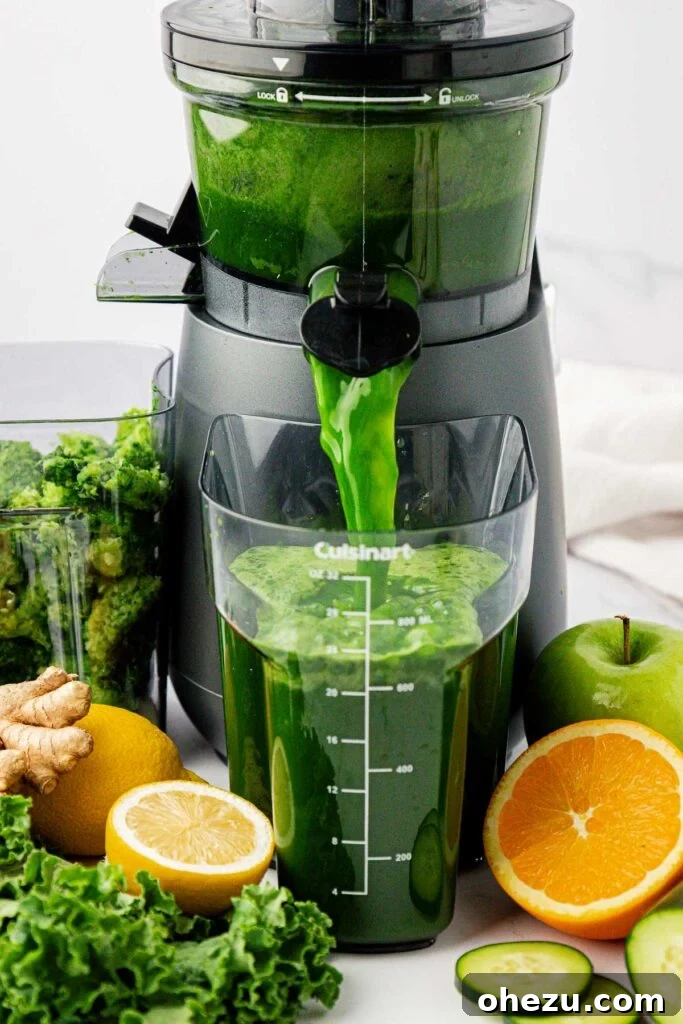
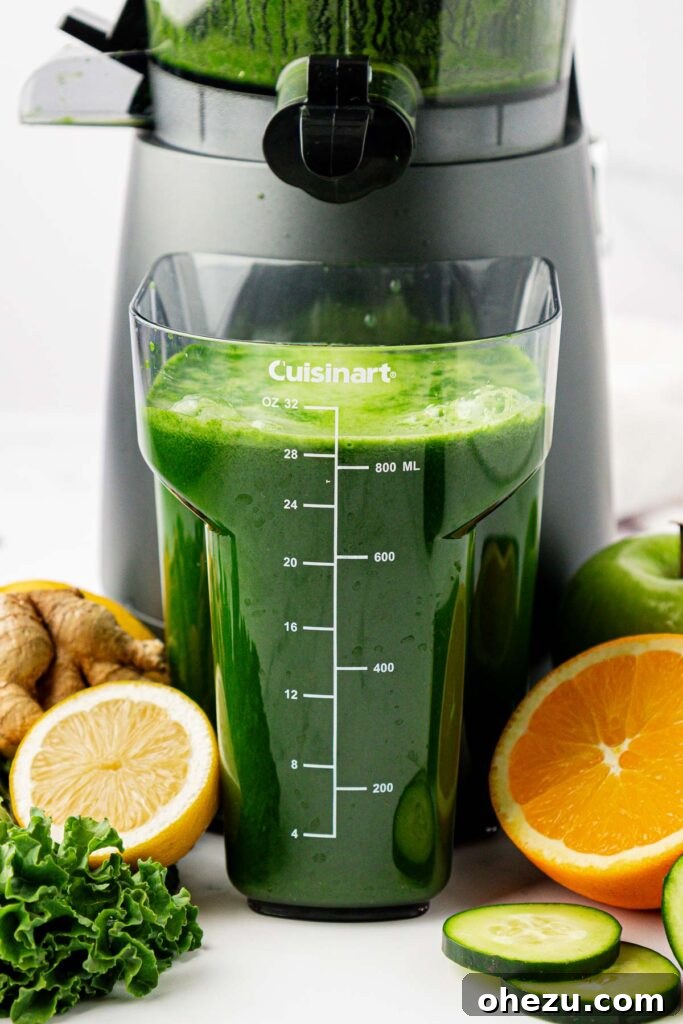
Step 2: Juice All Ingredients and Enjoy!
Once all your produce is meticulously prepped, begin feeding the ingredients through your juicer. A helpful tip for optimal juice extraction and to prevent clogging, especially with leafy greens, is to alternate between hard and soft ingredients. For example, follow a handful of kale leaves with a piece of apple or cucumber to help push the greens through more effectively. Collect the vibrant fresh juice in a glass or pitcher.
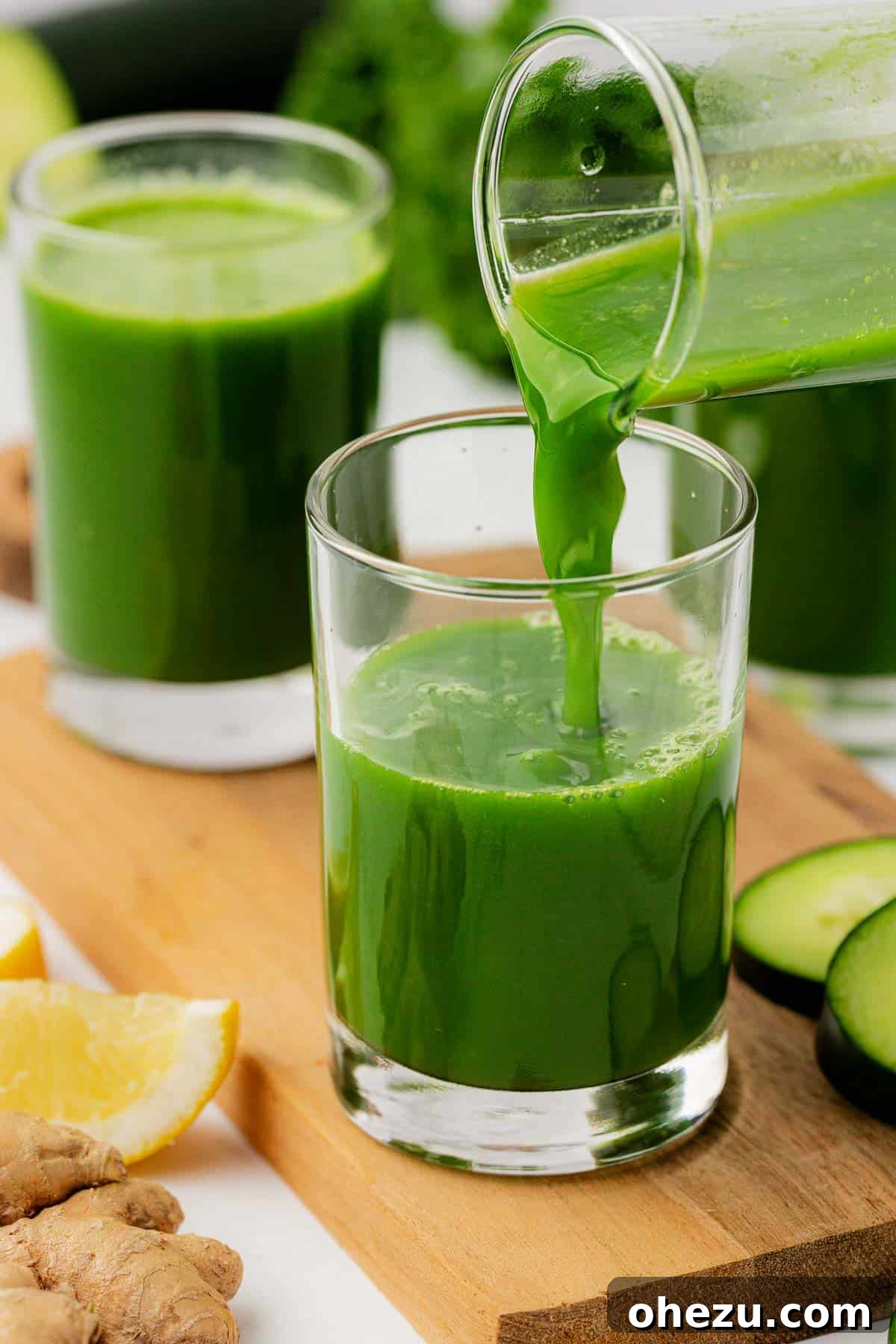
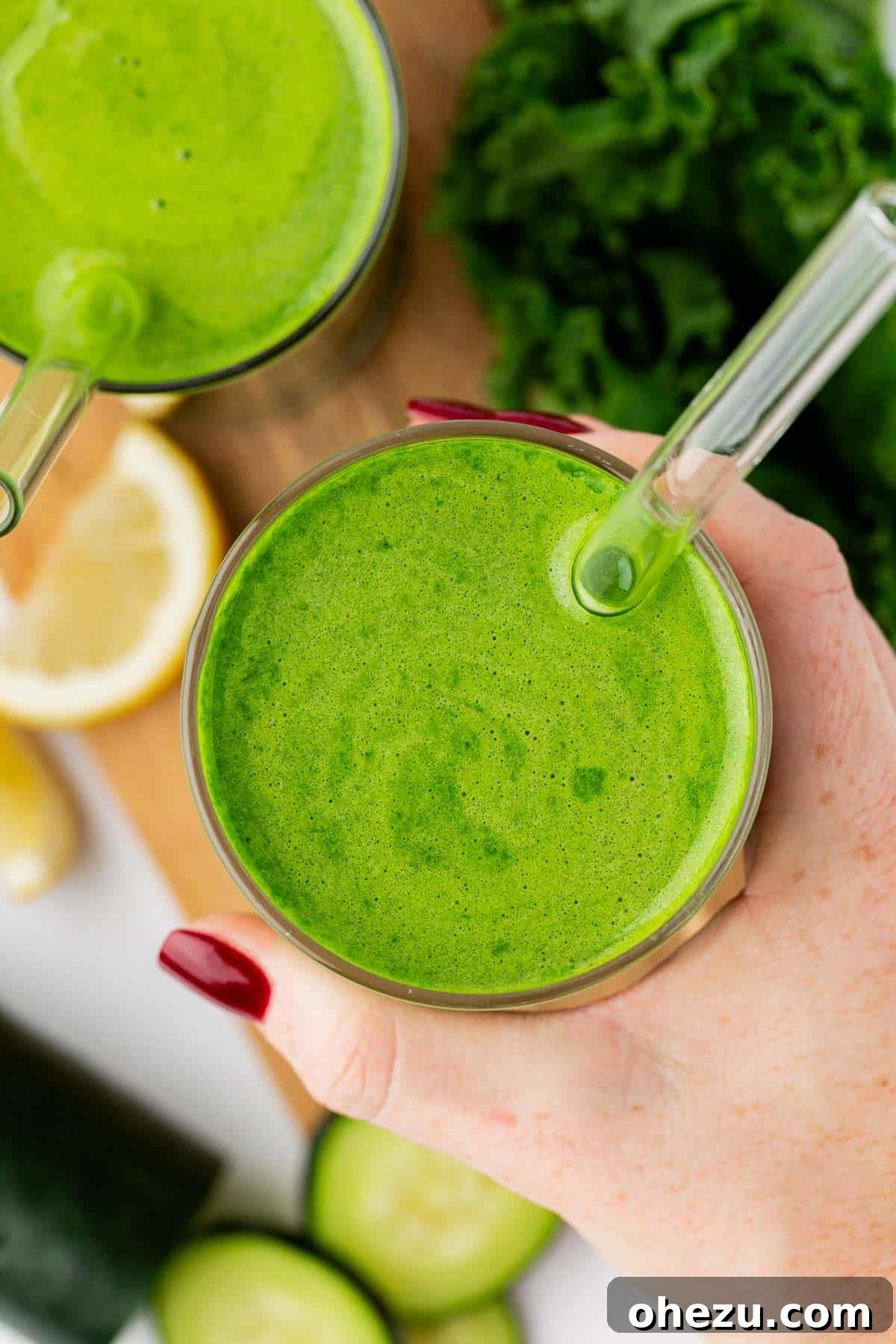
This light and delicious juice, bursting with bright citrus notes and naturally sweetened by the apple and orange, offers an incredibly delicious and energizing experience. It’s an ideal recipe for anyone venturing into the world of homemade green juices, providing a delightful and approachable introduction to the profound benefits of juicing at home.
Frequently Asked Questions About Kale Juice
Does kale produce a lot of juice?
Kale yields a moderate amount of juice compared to high-water content vegetables like cucumber or celery. However, when combined with other hydrating ingredients like in this recipe, a single bunch of kale will typically contribute to a generous yield of around 20 ounces of fresh, nutrient-rich juice.
Can you juice kale stems?
While the stems of kale are indeed edible and contain nutrients, many juicers, especially centrifugal models, may struggle to process their tough, fibrous nature efficiently. Juicing stems can potentially lead to more pulp, less juice, and unnecessary strain on your appliance. For a smoother juice and to ensure the longevity of your juicer, I highly recommend removing the leaves from the stems before juicing.
Can I juice kale by itself?
Technically, you can juice kale by itself. However, I generally do not recommend it, especially for those new to green juicing. Straight kale juice can be quite bitter, intense, and somewhat overwhelming for most palates. The beauty of this particular recipe lies in the harmonious blend of other ingredients—cucumber for hydration, orange and green apple for natural sweetness, and lemon and ginger for brightness and zest—which collectively mellow the kale’s strong taste, creating a delightfully balanced, lightly sweet, and incredibly refreshing flavor that is much more enjoyable.
What type of juicer is best for kale and other leafy greens?
Masticating (slow) juicers are generally considered the superior choice for leafy greens like kale. They operate at a lower speed, thoroughly pressing and crushing the produce, which results in a higher juice yield, less oxidation, and better preservation of heat-sensitive nutrients and enzymes. However, a good quality centrifugal (fast) juicer can also produce excellent results, especially if you feed the kale slowly or bundle it with other firmer ingredients to aid in extraction.
Can I add other ingredients or make variations to this kale juice recipe?
Absolutely! This recipe serves as a fantastic, versatile base. Feel free to experiment with other healthy additions to customize your juice. Popular choices include spinach for an extra iron boost, celery for added hydration and a slightly savory note, parsley for detoxification, mint for a cooling sensation, or even a small pinch of cayenne pepper for an invigorating metabolic kick. Adjusting the quantities of apple or orange can also finely tune the sweetness to your personal preference.
Optimal Storage Tips for Your Fresh Kale Juice
While fresh juice is always best consumed immediately after preparation to maximize its nutrient benefits and vibrant flavor, it’s often practical and convenient to prepare a larger batch. With proper storage techniques, you can enjoy your homemade kale juice for up to 24 hours without significant loss of quality or taste.
Preserving Peak Freshness:
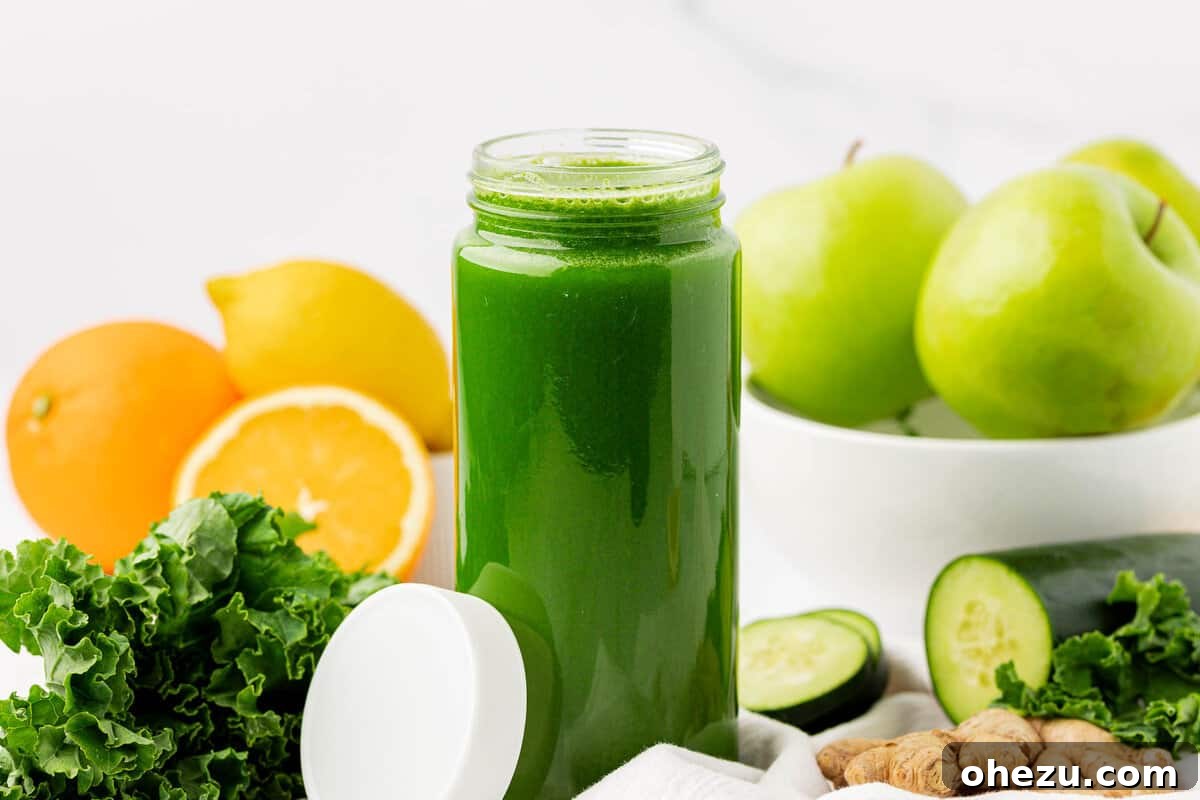
To store leftover kale juice effectively and minimize nutrient degradation, it is crucial to transfer it into a glass bottle or jar with an airtight lid as quickly as possible after juicing. The primary goal is to minimize the juice’s exposure to air, which causes oxidation and can reduce its nutritional value and freshness. Therefore, fill your container to the very brim, leaving as little air space as possible before securely sealing it with the lid. Store the sealed container in the coldest part of your refrigerator for a maximum of 24 hours.
When you’re ready to enjoy your stored juice, you might observe some natural separation of the ingredients, where denser particles settle at the bottom. This is a completely normal occurrence and indicates that your juice is natural, free from artificial stabilizers. Simply give the jar a good, vigorous shake before opening and pouring to reintegrate all the delicious flavors and ensure an even distribution of nutrients.
Explore More Vibrant Juicing Recipes
If you’re loving the journey into fresh juicing and eager to expand your repertoire, you’ll be delighted to explore these other fantastic recipes. Diversify your routine, experiment with new flavors, and maximize your nutrient intake with these healthy and delicious options:
- Best Green Juice Recipe
- Cucumber Juice
- Immunity Shots
- Vegetable Juice
- Spinach Juice
- Carrot Orange Juice
- Celery Juice Recipe
- Green Apple Juice
- Pineapple Cucumber Juice
- Carrot Juice
- Beet & Carrot Juice
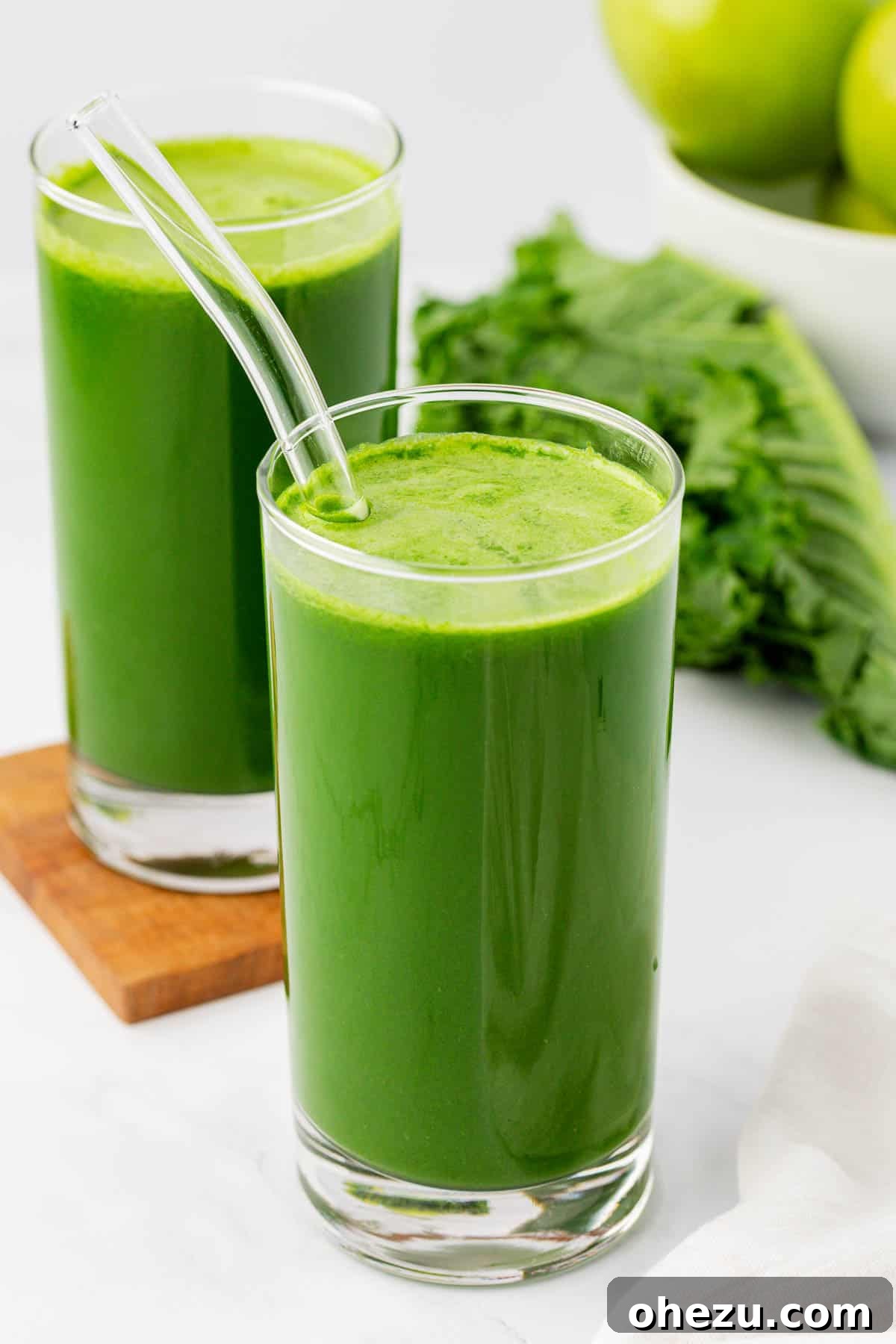
Whether you are just embarking on your juicing adventure or you’re a seasoned juicing enthusiast, this vibrant kale juice offers a fantastic, delicious, and effective way to seamlessly integrate more nutrient-rich kale into your daily life. Enjoy the journey to better health, one glass at a time!
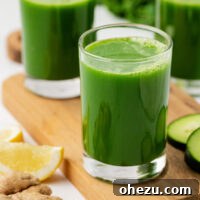
Kale Juice Recipe
By: Joy Shull
This light and refreshing kale juice is made with vibrant citrus and crisp apple, creating a delicious and energizing green juice that’s perfect for any time of day.
Prep Time: 10 mins | Total Time: 10 mins | Servings: 2 (~20 fl oz)
Ingredients:
- 1 bunch of kale, thoroughly washed and tough stems removed
- 1 large cucumber, peeled (optional for smoother juice) and cut into long strips to fit juicer
- 1 large orange, peeled and quartered
- 1 small lemon, peeled and quartered
- 1 green apple, washed, cored, and cut into slices
- 1 inch piece of fresh ginger, peeled
Instructions:
- Thoroughly wash and prepare all your fruits and vegetables according to the detailed preparation instructions in the article above.
- Feed all prepared ingredients through your juicer. For optimal juice extraction and to prevent clogging, alternate between softer and firmer items (e.g., kale followed by apple or cucumber).
- Serve the fresh kale juice immediately for the best taste and nutrient benefits. For later consumption, store leftovers properly as described in the storage section.
Nutrition Information (per serving, approx. 10 fl oz):
(Please note: Nutritional values are estimates and can vary based on specific ingredient sizes, ripeness, and preparation methods. This information is for general guidance only.)
- Calories: 125 kcal
- Carbohydrates: 30 g
- Protein: 3 g
- Fat: 1 g
- Saturated Fat: 0.1 g
- Polyunsaturated Fat: 0.3 g
- Monounsaturated Fat: 0.1 g
- Sodium: 21 mg
- Potassium: 608 mg
- Fiber: 8 g
- Sugar: 19 g
- Vitamin A: 3164 IU
- Vitamin C: 99 mg
- Calcium: 140 mg
- Iron: 1 mg