
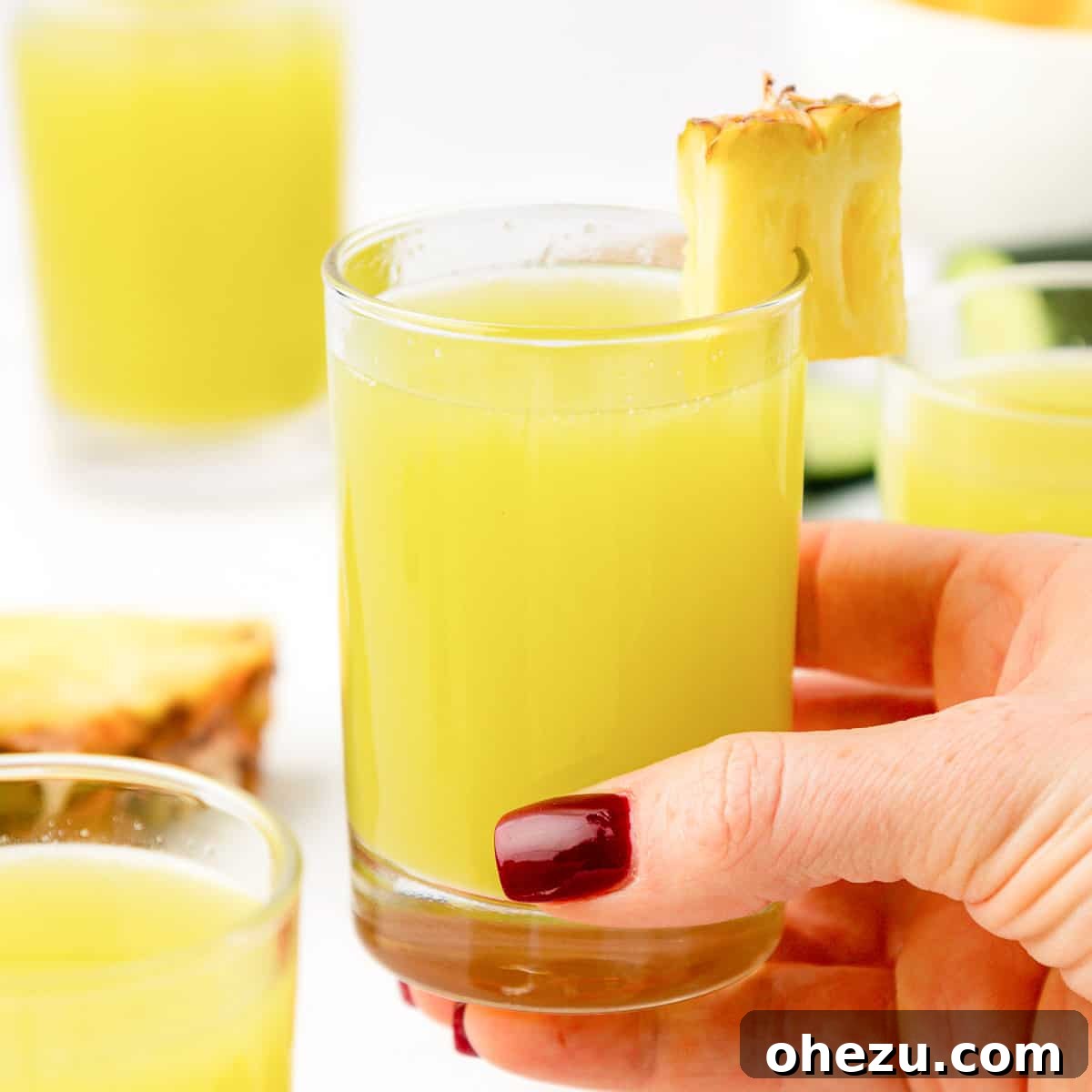
Unlock Vibrant Health with Refreshing Pineapple Cucumber Juice
This delightful Pineapple Cucumber Juice is not just a treat for your taste buds; it’s a powerhouse of essential nutrients, offering a fantastic way to hydrate your body and boost your Vitamin C intake!
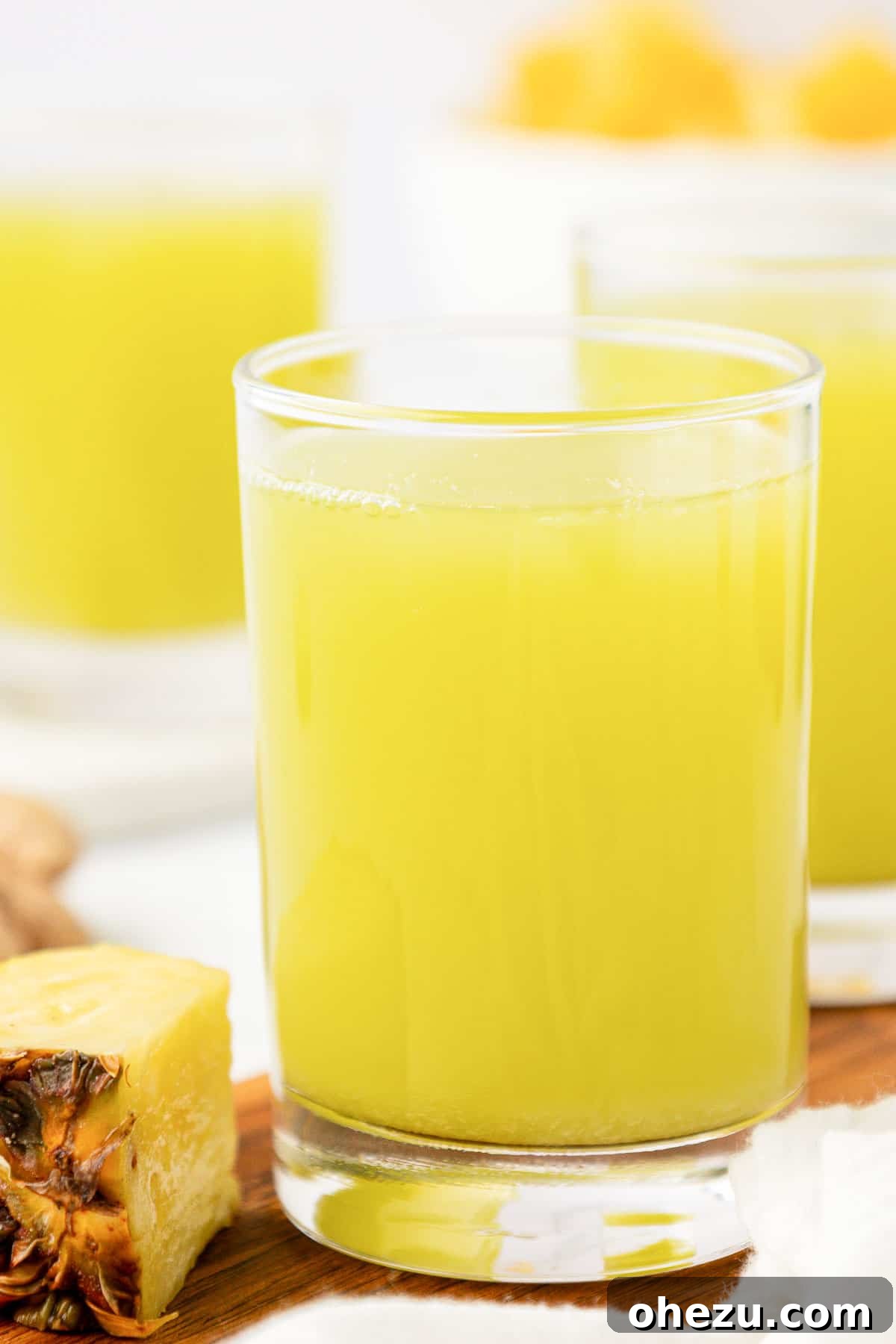
Why This Pineapple Cucumber Juice Will Be Your New Favorite
Prepare to fall in love with this naturally sweet and incredibly hydrating fresh juice! The harmonious blend of pineapple, cucumber, lemon, and ginger creates a vibrant flavor profile with just the right amount of zing. It’s the perfect concoction to awaken your senses, provide a natural energy lift, and support your overall well-being. Whether you’re looking for a refreshing start to your day, a midday pick-me-up, or a healthy alternative to sugary drinks, this pineapple cucumber juice recipe ticks all the boxes.
Embracing the Juicing Lifestyle: My Weekly Ritual
For me, juicing has transformed into an indispensable part of my weekly routine. I prioritize making fresh juice at least three to four times a week, and often more if my schedule allows. It’s not about replacing entire meals or embarking on restrictive juice fasts; instead, I integrate it into my daily life as a simple, enjoyable method to infuse my body with an extra surge of vital nutrients and diverse vegetables. Juicing consistently helps me consume a greater variety and quantity of fresh produce than I might otherwise, ensuring my diet is always rich in plant-based goodness.
Cucumbers, with their mild flavor and incredibly high water content, have become my ultimate go-to ingredient for a multitude of juicing creations. They are exceptionally hydrating, impart a subtle sweetness, and possess a remarkable versatility that allows them to pair seamlessly with almost any fruit or vegetable imaginable. Furthermore, their generous juice yield makes them an ideal and efficient base for many of my favorite juicing recipes, including this tropical and tangy pineapple cucumber blend.
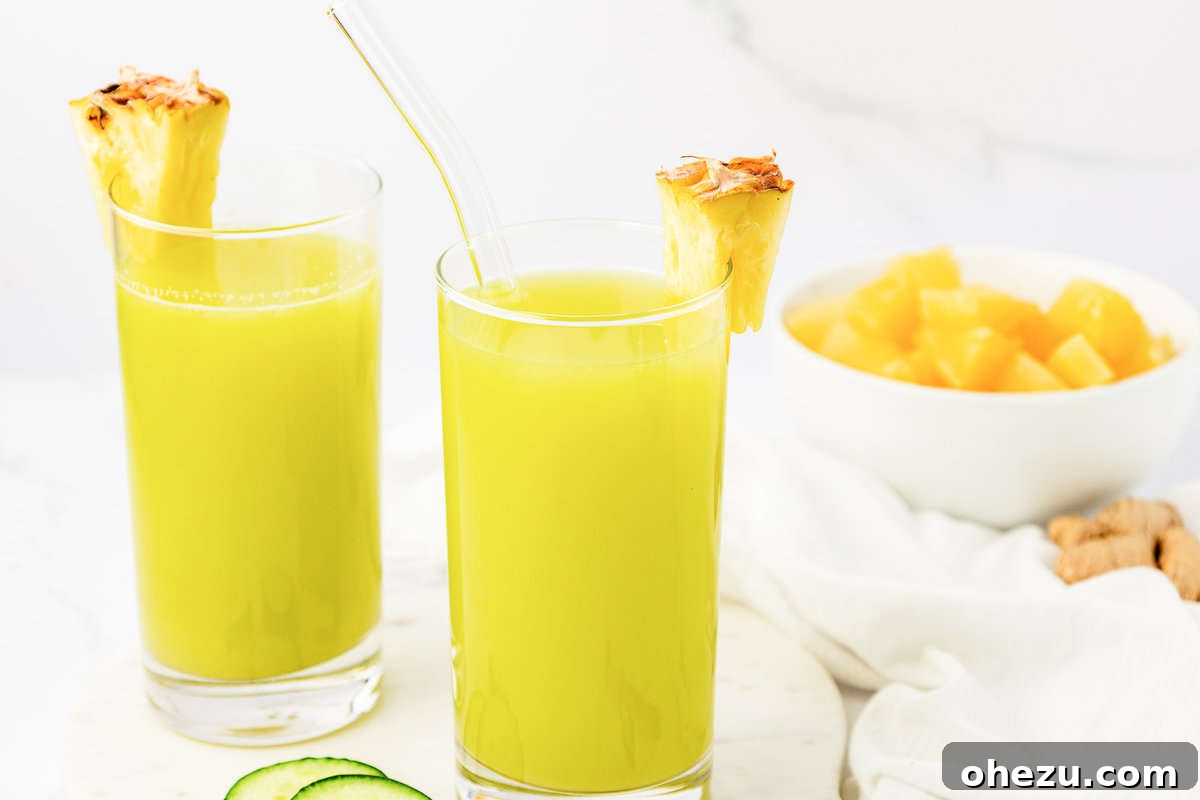
While the detailed recipe with precise measurements is provided in the recipe card at the conclusion of this article, here’s a quick overview of the star ingredients you’ll need to craft this invigorating juice!
The Power-Packed Ingredients Behind This Refreshing Juice
Each ingredient in this pineapple cucumber juice recipe brings a unique set of health benefits and contributes to its delightful flavor:
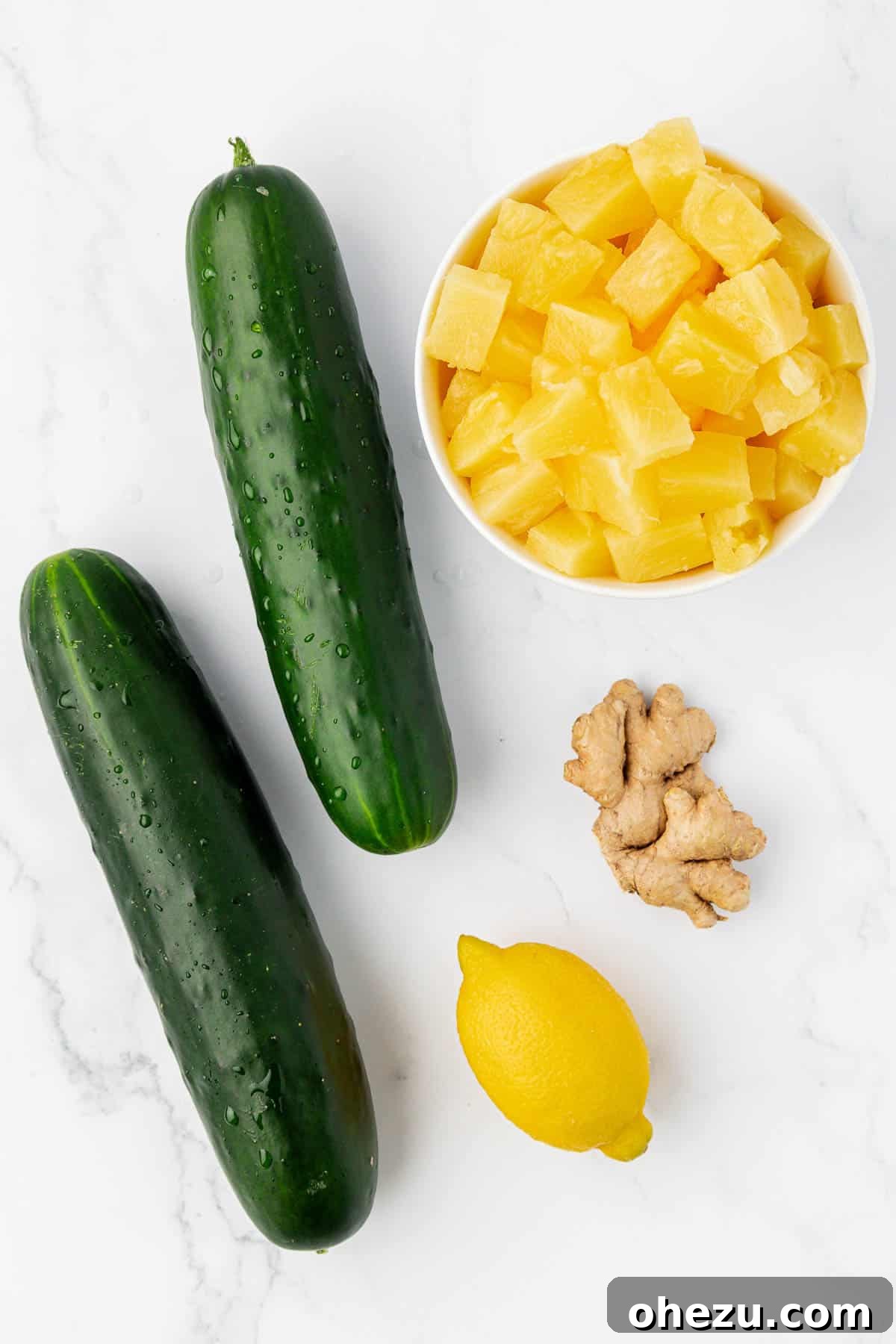
- Fresh Lemon: Known for its high Vitamin C content, lemon adds a bright, tangy zest that cuts through the sweetness and enhances the overall flavor. It’s also celebrated for its detoxifying properties and ability to support immune function.
- Crisp Cucumber: The ultimate hydrator, cucumbers are packed with water, electrolytes, and antioxidants. They provide a smooth, refreshing base for the juice, contributing to skin health and aiding in flushing out toxins.
- Sweet Pineapple: This tropical fruit is not only delicious but also rich in Vitamin C and bromelain, an enzyme known for its anti-inflammatory and digestive benefits. Pineapple offers a natural sweetness that perfectly balances the other ingredients.
- Zesty Ginger: A powerhouse of health benefits, ginger adds a warm, spicy kick that invigorates the juice. It’s renowned for its anti-nausea properties, anti-inflammatory effects, and ability to boost immunity.
How to Make Your Own Invigorating Pineapple Cucumber Juice
Crafting this nutritious and delicious juice is remarkably simple, requiring just a few fresh ingredients and a juicer. Follow these easy steps to enjoy a glass of vibrant goodness:
Step 1: Prepare Your Fresh Produce
Begin by thoroughly washing all your fruits and vegetables under cold running water. Proper preparation is key to a smooth and flavorful juice:
- Cucumbers: While you can leave the peel on if you prefer, I personally find that peeling my cucumbers results in a smoother, less bitter juice. If keeping the peel, ensure it’s scrubbed clean. Then, cut the cucumber into manageable strips or chunks that fit easily into your juicer’s chute.
- Pineapple: Peel the pineapple and remove the core. Cut the flesh into chunks suitable for your juicer. For the most nutrients and best flavor, always opt for fresh, ripe pineapple over canned varieties.
- Lemon: Lemon peel has a very strong, often bitter flavor when juiced. For this reason, I highly recommend peeling your lemon entirely before juicing. Once peeled, cut it into quarters or halves to make it easier for the juicer to process.
- Ginger: Peel the skin off your piece of fresh ginger using a spoon or a small knife. Cut it into smaller pieces if necessary.
Can I Use Canned Pineapple for Juicing?
While technically possible, using fresh pineapple is highly recommended for this recipe. Freshly cut pineapple offers a superior nutritional profile and a much more vibrant flavor compared to canned versions, which often contain added sugars and preservatives, and may have lost some nutrients during processing.
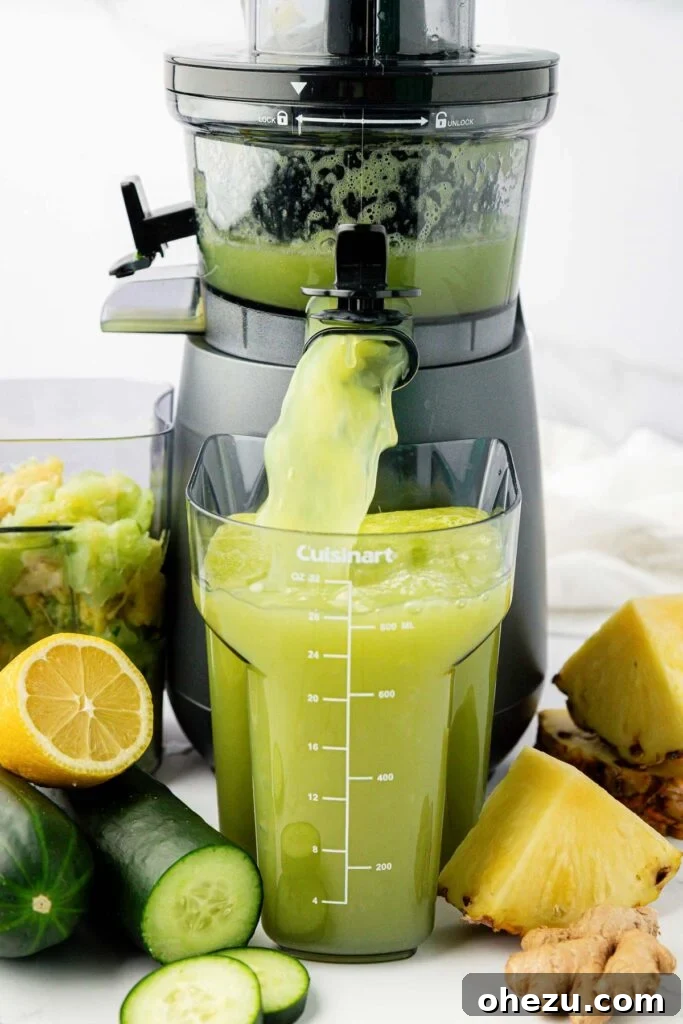
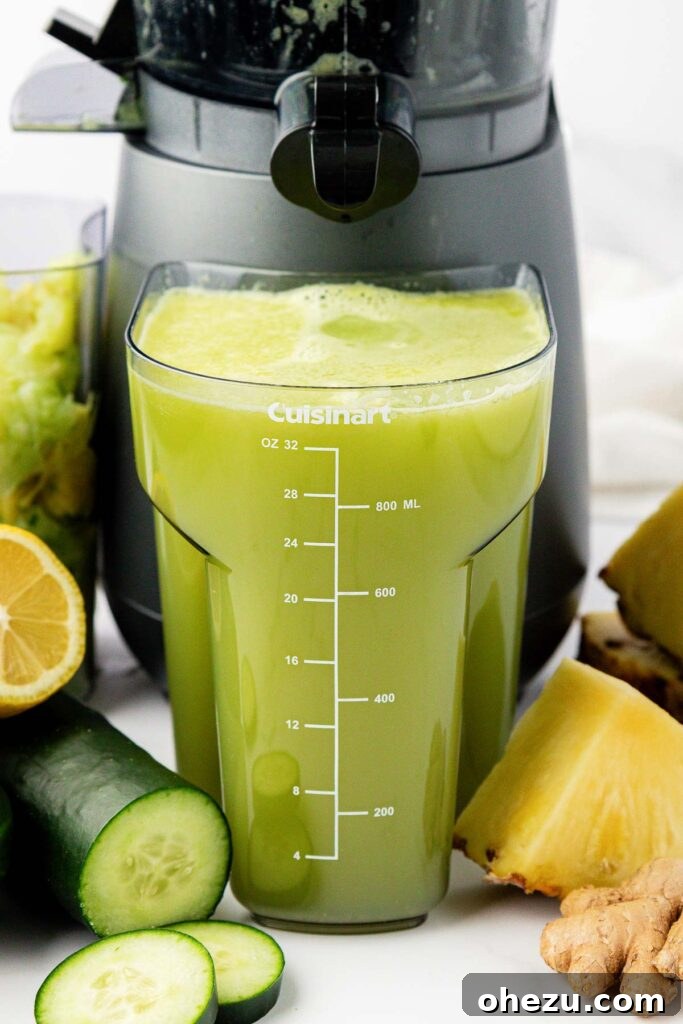
Step 2: Juice All Ingredients
With all your ingredients prepped, it’s time to juice! Feed the prepared pineapple, cucumber, lemon, and ginger pieces through your juicer. If your juicer has different settings, follow its instructions for optimal yield. Collect the fresh juice in a glass or a clean pitcher.
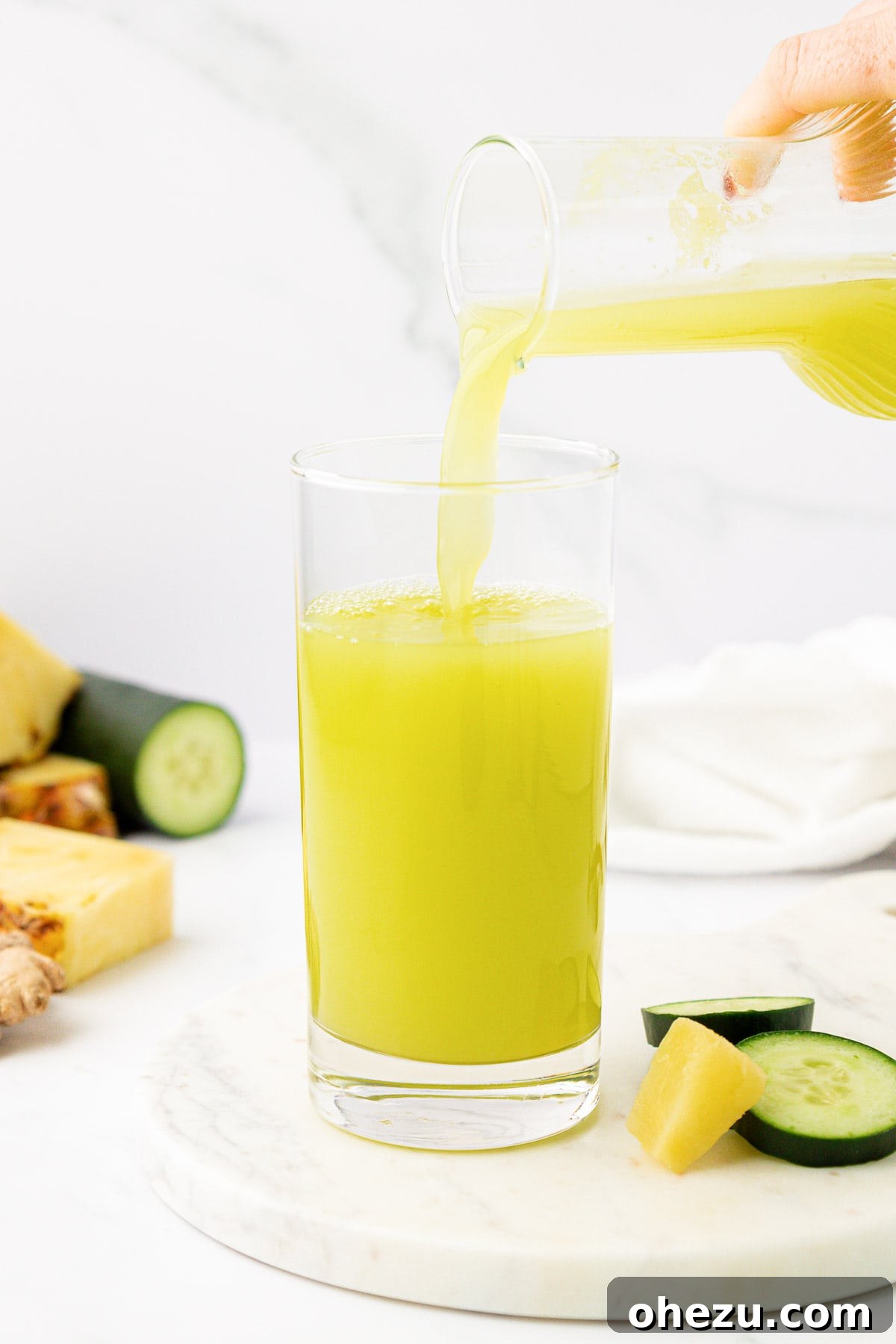
This vibrant juice is incredibly refreshing to sip on. The cucumber’s natural cooling properties and exceptional hydrating power combine beautifully with pineapple’s tropical sweetness, perfectly complemented by the invigorating tang of fresh lemon and the subtle spicy warmth of ginger. Each ingredient plays a crucial role in creating a balanced and utterly delightful beverage.
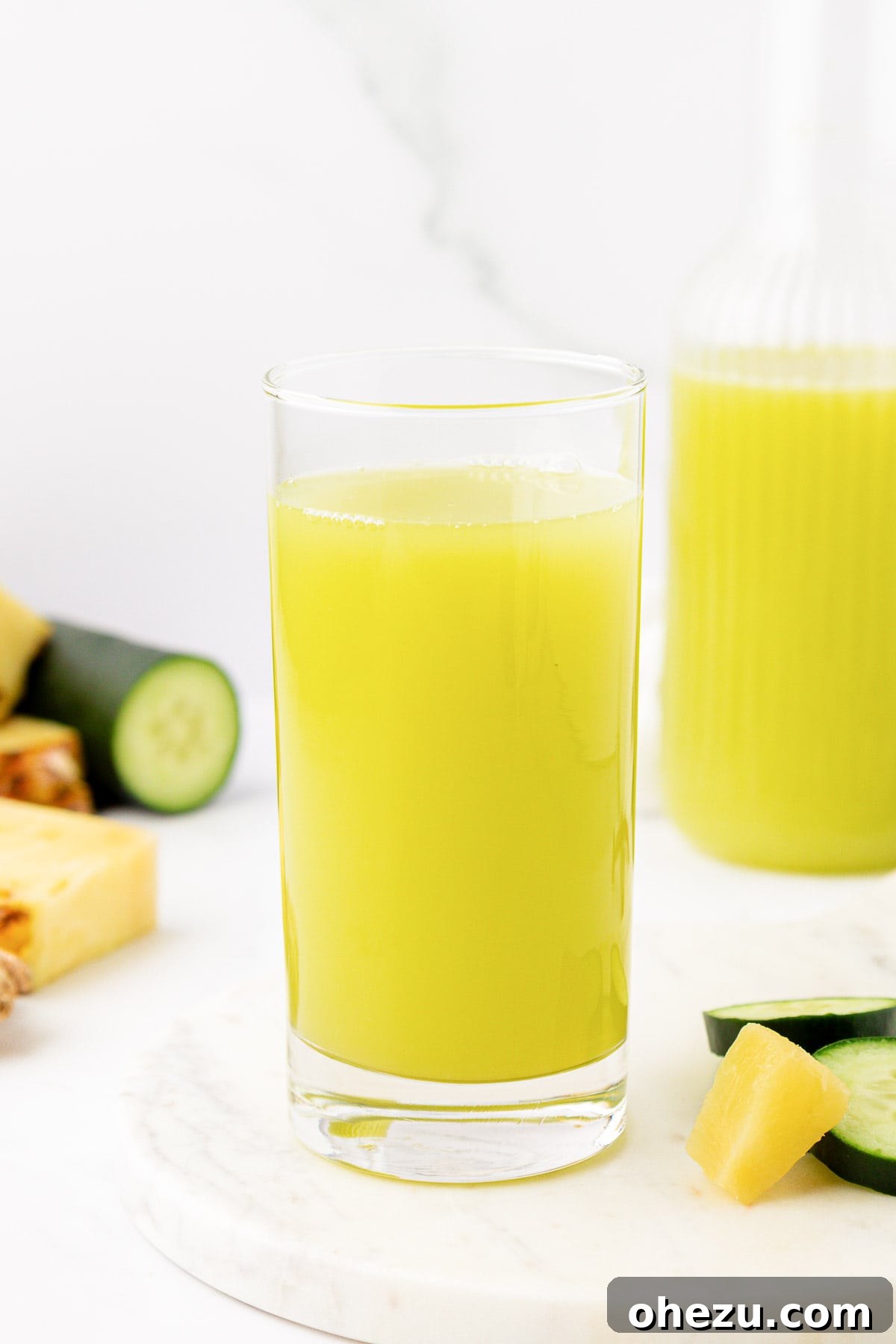
This recipe is designed to yield approximately two 8 oz glasses of juice, making it perfect for immediate enjoyment or for sharing. However, it’s incredibly easy to scale up! You can effortlessly double or even triple the recipe if you wish to prepare a larger batch for storage, ensuring you have extra juice to savor the following day.
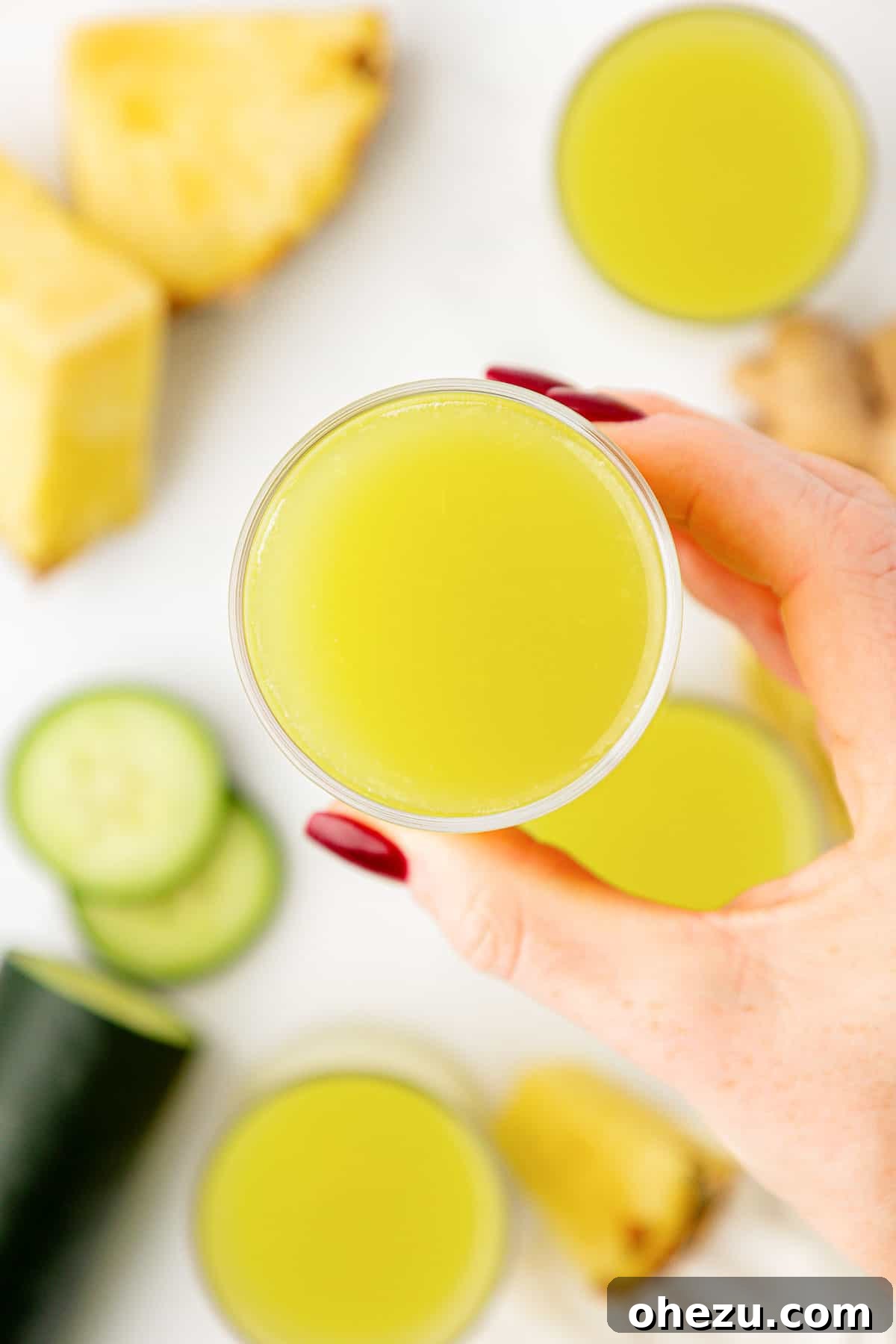
Optimal Storage and Batch Juicing Tips
For the best flavor and maximum nutrient retention, it is always recommended to drink this juice immediately after preparation. However, if you’re keen on making your juicing routine more efficient, leftovers can be stored:
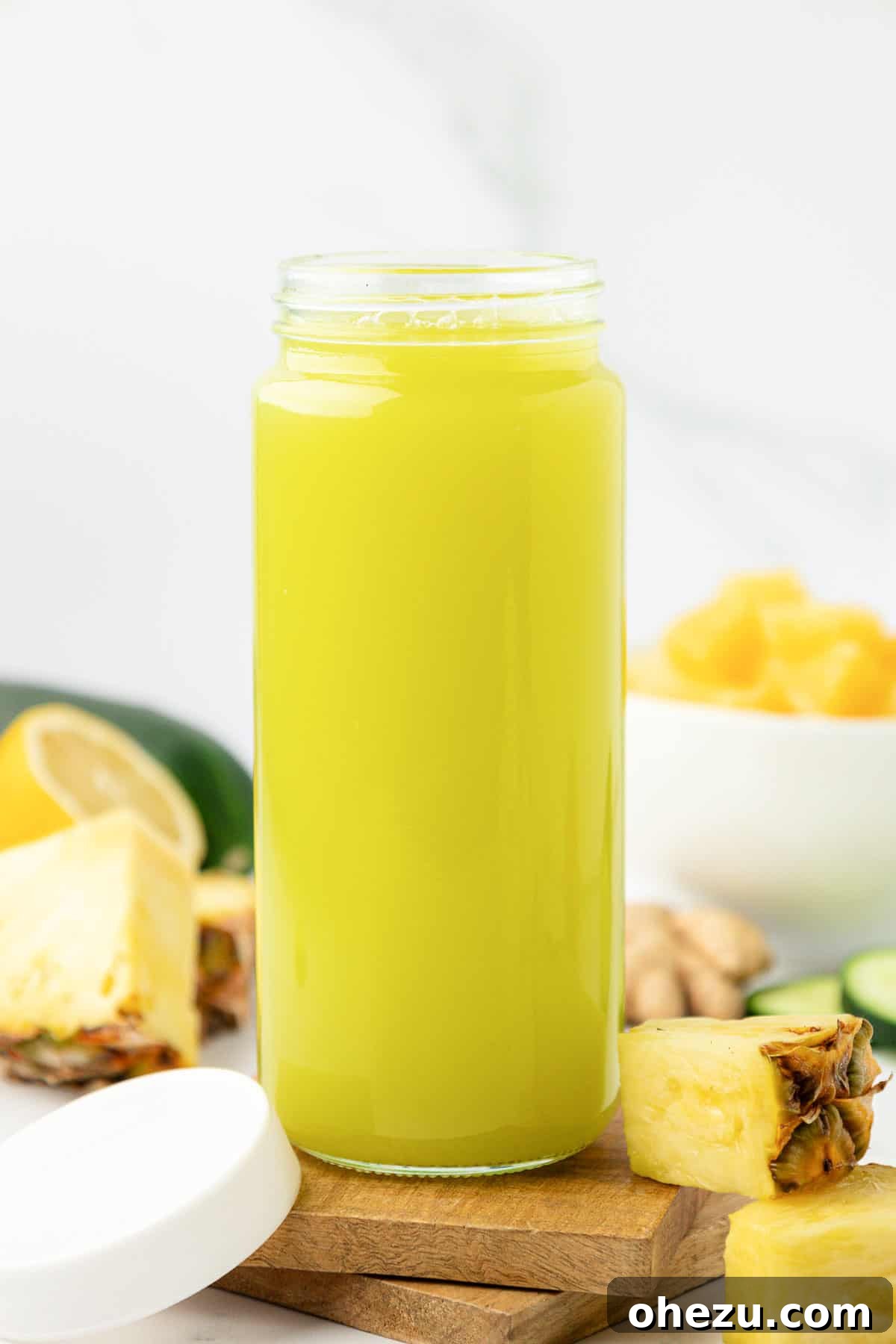
- Storage: Transfer any remaining pineapple cucumber juice into a clean glass bottle or jar with an airtight lid. This minimizes oxidation and helps preserve freshness.
- Refrigeration: Store the sealed container in the refrigerator for up to 24 hours. While it can last a little longer, nutrients diminish over time, so consuming it within a day is ideal.
- Natural Separation: It’s perfectly normal for fresh juices to separate into layers when stored. Before drinking, simply give the jar a good shake to recombine the ingredients and enjoy.
Batch Juicing for Convenience
On days when time is a luxury, I often dedicate a specific period to batch juicing. My strategy involves preparing one recipe for immediate consumption, then simultaneously juicing another batch of a different recipe, which I promptly store in the refrigerator for the next day. This efficient approach drastically reduces cleanup time and ensures I have two days’ worth of nutrient-rich juice readily available, making it easier to maintain a consistent healthy habit.
Creative Ways to Repurpose Juicer Pulp
After juicing, you’re often left with a significant amount of fibrous pulp. While many people simply discard it, this pulp is a valuable resource! Instead of letting it go to waste, consider these creative and eco-friendly ways to repurpose your leftover pineapple and cucumber pulp:
- Composting: The simplest solution is to add your pulp to your compost bin. It’s a fantastic way to enrich your garden soil.
- Vegetable Broth Base: Cucumber and ginger pulp can be a great addition to homemade vegetable broths, adding subtle flavor and extra nutrients.
- Baking: Incorporate finely blended fruit and vegetable pulp into muffins, breads, or crackers for added fiber and moisture. Pineapple pulp, in particular, can add a nice sweetness.
- Smoothie Booster: Freeze small portions of pulp and add them to your next smoothie for an extra fiber and nutrient kick.
- Facial Masks: Cucumber pulp is renowned for its soothing properties. Mix it with a bit of yogurt or honey for a refreshing and hydrating DIY face mask.
- Pet Treats: Some vegetable pulps can be safely incorporated into homemade pet treats, but always check with your vet first regarding specific ingredients.
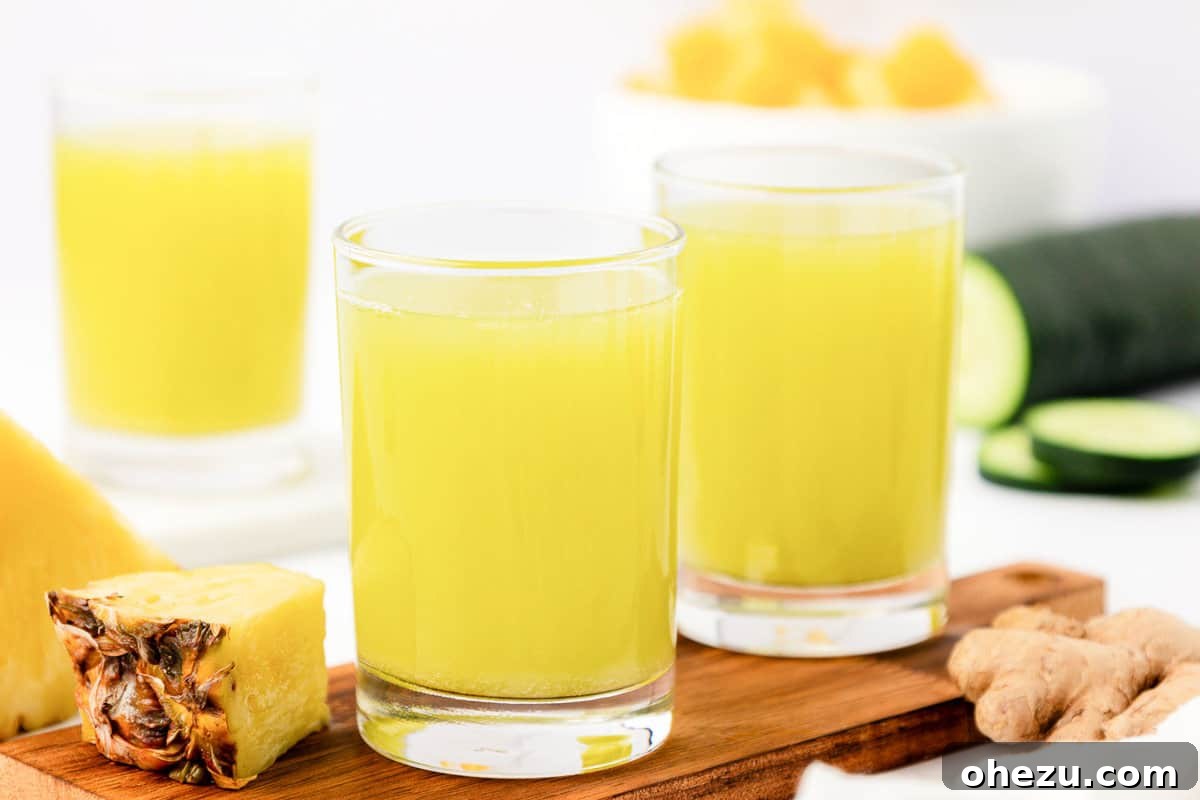
Pineapple Cucumber Juice FAQs
Do I have to peel cucumber before juicing?
While not strictly necessary to peel your cucumber before juicing, it is often preferred. The skin of a cucumber can sometimes impart a slightly bitter taste and may result in a less smooth juice. Peeling the cucumber tends to yield a milder, more pleasant flavor and a silkier texture. If you choose to leave the peel on for extra fiber and nutrients, ensure you wash the cucumber thoroughly, preferably organic, to remove any potential residues.
How much juice does this recipe make?
This specific recipe is designed to produce approximately 16 ounces (or two 8-ounce servings) of delicious pineapple cucumber juice. It’s a perfect quantity for one or two people to enjoy fresh. You can easily adjust the ingredient amounts to make a larger batch for meal prep or for serving more guests.
What’s the best type of juicer for this recipe?
Both centrifugal and masticating (slow) juicers will work for this recipe. Masticating juicers are often preferred by serious juicers as they extract more juice and preserve more nutrients by generating less heat, resulting in a slightly higher yield and better quality juice. However, a good quality centrifugal juicer will still produce a fantastic, refreshing drink.
Can I add other fruits or vegetables to this juice?
Absolutely! This pineapple cucumber juice serves as an excellent base for experimentation. Consider adding a handful of spinach or kale for an extra green boost, a few mint leaves for heightened freshness, or even a small apple for additional sweetness and fiber. Turmeric root is another fantastic addition for its powerful anti-inflammatory properties.
Is this juice good for detoxification?
The ingredients in this juice – especially cucumber and lemon – are known for their hydrating and cleansing properties. While no single food or drink can “detox” your body entirely, incorporating fresh juices like this can support your body’s natural detoxification processes by providing essential vitamins, minerals, and antioxidants, aiding in hydration and promoting healthy digestion.
Discover More Invigorating Juicing Recipes
If you’ve enjoyed this pineapple cucumber juice, you might be interested in exploring other healthy and delicious juicing options to diversify your routine. Juicing offers an endless array of possibilities to nourish your body with fresh, raw produce. Check out these additional recipes:
- Cleansing Green Juice Recipe
- Sweet & Tart Green Apple Juice
- Potent Immunity Shots
- Garden Fresh Vegetable Juice
- Naturally Sweet Carrot Juice
- Nutrient-Rich Spinach Juice
- Bright Carrot Orange Juice
- Digestive Celery Juice
- Green Powerhouse Kale Juice
- Simple Cucumber Juice Recipe
- Earth Sweet Beet and Carrot Juice
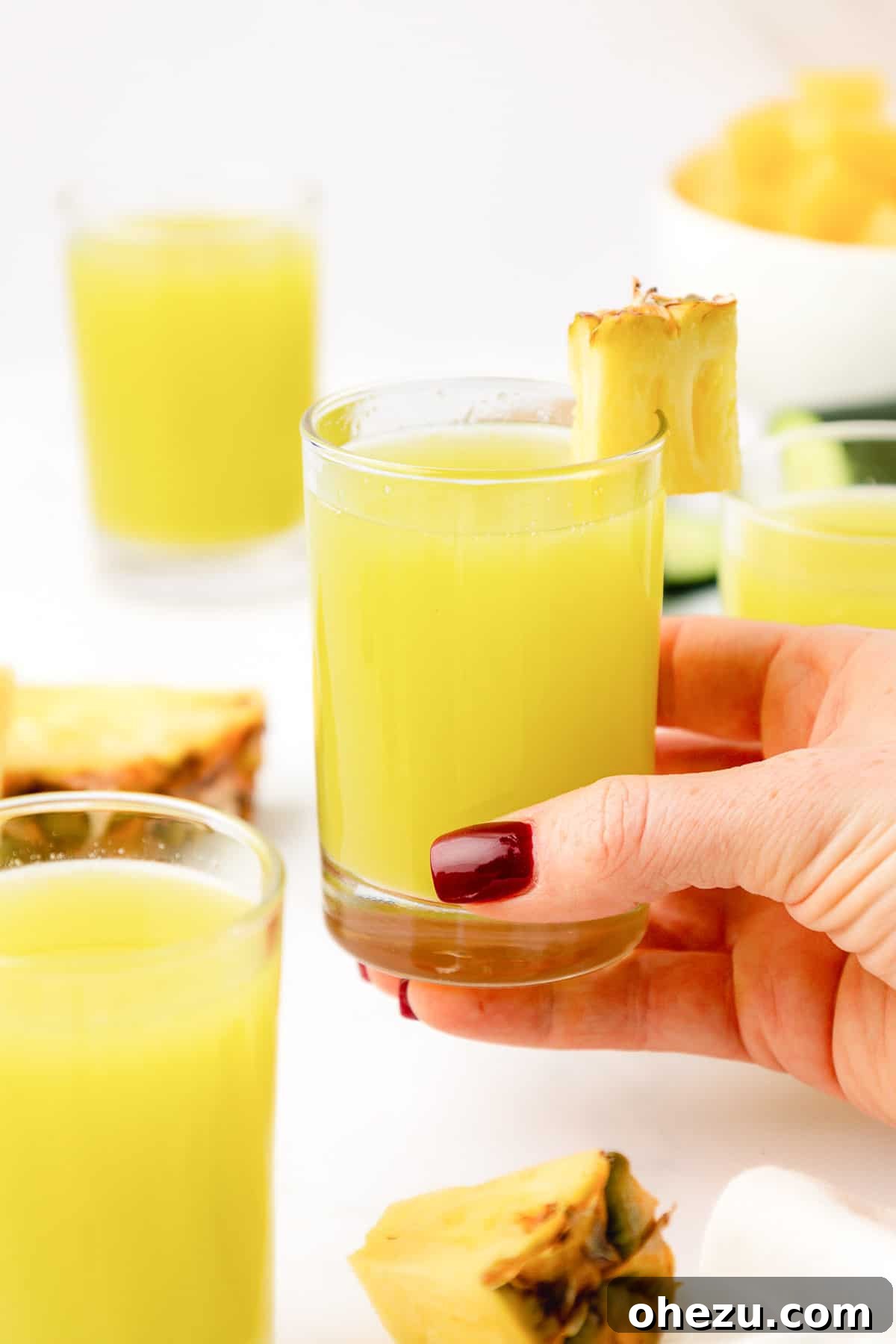

Pineapple Cucumber Juice
By: Joy Shull
This delicious Cucumber and Pineapple Juice is packed full of nutrients like vitamin C and so hydrating!
10 mins
10 mins
16 oz (approx. 2 servings)
Ingredients
- 2 cucumbers, peeled and cut into long strips
- 2 cups fresh pineapple chunks
- 1 inch piece of fresh ginger, peeled
- 1 small lemon, peeled and cut into quarters
Instructions
- Prepare all your ingredients by washing, peeling (as recommended for lemon and optionally cucumber), and cutting them into sizes that will fit easily into your juicer’s chute.
- Feed all the prepared ingredients through your juicer. Collect the fresh juice in a glass or pitcher.
- Serve immediately for the best taste and nutritional value, or store any leftovers in an airtight glass jar in the refrigerator for up to 24 hours. Remember to shake well before serving if stored.
Nutrition Information (per 8 oz serving)
(Approximate values based on general ingredient data)
- Calories: 184 kcal
- Carbohydrates: 47g
- Protein: 2g
- Sodium: 7mg
- Fiber: 3g
- Sugar: 39g
*Please note: Nutritional information is an estimate and may vary based on specific ingredients, preparation methods, and serving sizes.